
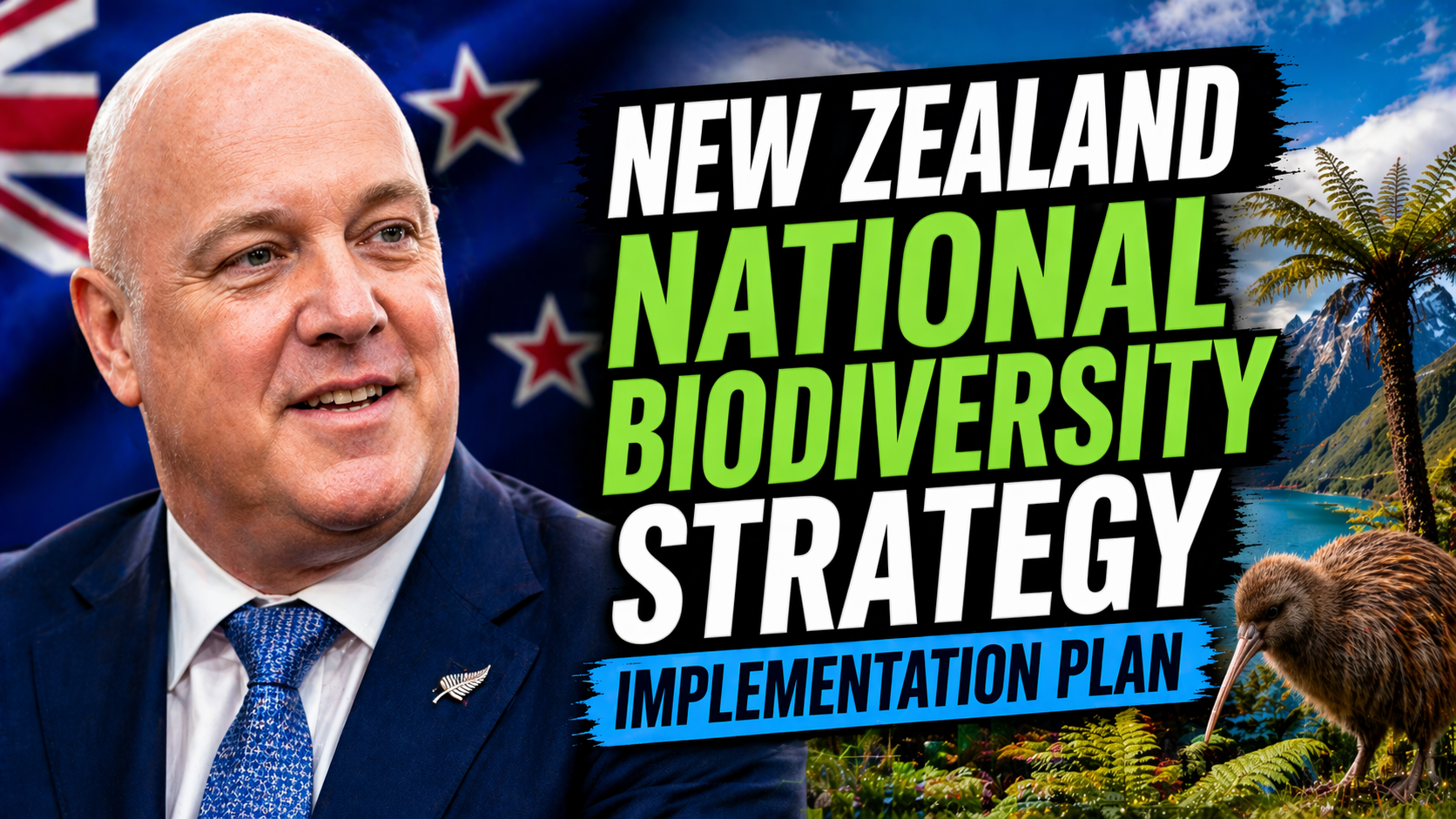
New Zealand’s National Biodiversity Strategy Implementation Plan serves as a roadmap to halt and reverse the nation’s alarming biodiversity decline. Aligned with global commitments, it emphasizes practical actions across government, iwi, and communities to protect unique ecosystems.
Strategy Overview
The plan builds on the Aotearoa New Zealand Biodiversity Strategy, integrating 13 national targets submitted to the Convention on Biological Diversity in 2024. These targets address the Kunming-Montréal Global Biodiversity Framework, focusing on halting loss by 2030 and restoring nature by 2050. Central government leads coordination through the Department of Conservation, partnering with the Ministry for the Environment and iwi organizations.
Implementation phases span from gazettal through 10 years, divided into preparation, initial rollout, significant natural area mapping, and long-term monitoring. Core objectives include maintaining habitats, recovering species, and integrating Treaty of Waitangi principles. Funding draws from existing budgets plus new investments in priority programs.
The strategy recognizes New Zealand’s status as a biodiversity hotspot, with over 80 percent endemic species facing threats from predators, habitat loss, and climate change. Success hinges on collaborative governance, blending Māori knowledge with scientific approaches.
Core Goals
Goals center on three pillars: conservation, sustainable use, and equitable benefit-sharing. Primary aims involve protecting viable populations of all native species and restoring degraded ecosystems. By 2030, targets seek 30 percent of land and sea under effective protection, up from current levels.
Specific objectives target pest eradication, wetland restoration, and genetic diversity preservation. Cultural goals prioritize iwi/hapū interests, ensuring customary practices support conservation. Economic integration promotes nature-based solutions for climate resilience, like carbon-sequestering forests.
Long-term visions include healthy indigenous ecosystems providing cultural, recreational, and economic value. Progress markers track habitat coverage, species recovery rates, and community involvement.
| Goal Category | Key Targets | Timeline |
|---|---|---|
| Habitat Protection | Full range of ecosystems maintained | Ongoing |
| Species Recovery | Viable populations for all natives | 2030 |
| Cultural Partnership | Strengthen iwi/government ties | Immediate |
| Pest Control | Eradicate key browsers/predators | Phased |
Implementation Phases
Phase 1: Preparation and Gazettal
Pre-gazettal efforts focused on policy alignment and stakeholder consultation. Councils prepared for significant natural area identification, while central agencies audited existing tools like the National Policy Statement for Indigenous Biodiversity.
Phase 2: First-Year Actions
Post-commencement, regional councils without strategies began developing biodiversity plans. Territorial authorities notified significant natural areas in district plans. Support measures rolled out, including training for landowners.
Phase 3: Mapping and Scheduling
Within 2-5 years, all significant natural areas require mapping and plan integration. Regional biodiversity strategies become mandatory. Central reviews assess progress, adjusting for gaps.
Phase 4: Long-Term Monitoring
Beyond five years, full compliance ensures protected areas function effectively. Annual reporting feeds into global obligations, with adaptive management based on outcomes.
Phasing optimizes resources, preventing overload on local councils while building capacity.
Key Actions
Land and Freshwater Initiatives
Priority programs tackle high-degradation areas through predator control and weed eradication. Actions include fencing sanctuaries, planting natives, and restoring wetlands for carbon and biodiversity gains. Freshwater focuses on riparian buffers to curb pollution.
Community-led traps target possums, rats, and stoats, with tech like aerial 1080 where approved. Landowners receive incentives for covenants protecting bush remnants.
Coastal and Marine Efforts
Marine protected areas expand, emphasizing no-take zones for fish stocks. Coastal dune restoration combats erosion, integrating iwi management. Actions align with the Sea Change Plan, prioritizing vulnerable seabirds and marine mammals.
Species Recovery Programs
Threatened species like kiwi, kākāpō, and tuatara benefit from translocation and breeding. Genetic banking preserves diversity. Pest-free islands serve as arks, scaling to mainland sites.
| Action Theme | Specific Measures | Responsible Parties |
|---|---|---|
| Predator Control | Trap networks, 1080 drops | DOC, Councils |
| Habitat Restoration | Wetland/forest replanting | iwi, Community Groups |
| Marine Protection | No-take zones expansion | MPI, DOC |
| Monitoring | SNA mapping, species surveys | Regional Councils |
Policy and Support Measures
New tools include biodiversity credits for offsetting development. Training programs build council and iwi capacity. Funding supports research into climate-resilient practices. Integration with other strategies avoids duplication, like linking to emissions reduction plans.
Conservation Impact
Ecosystem Restoration
Early wins include doubled predator control coverage, benefiting forests where bird songs return. Wetland projects sequester carbon equivalent to thousands of hectares annually. Protected areas now cover more ground, with intact ecosystems prioritized for maximum gains.
Species at risk shift status: programs have uplifted dozens from endangered lists. Mainland islands demonstrate scalable success, hosting thriving native communities.
Economic and Social Benefits
Nature-based tourism generates revenue, with pest-free sites attracting visitors. Jobs in conservation employ thousands, blending employment with skill-building. Iwi enterprises manage lands sustainably, fostering economic independence.
Carbon markets reward regenerative practices, offsetting farming emissions. Health benefits from accessible nature enhance wellbeing.
| Impact Area | Projected Outcomes | Metrics |
|---|---|---|
| Species Recovery | 500+ populations stabilized | Threat status shifts |
| Carbon Sequestration | Equivalent to 10% emissions | Tonnes CO2/year |
| Economic Value | $Billions in tourism/jobs | GDP contribution |
| Community Engagement | Widespread iwi participation | Partnership numbers |
Challenges and Adaptations
Predator resilience demands innovation, like gene drives or vaccines. Climate change accelerates threats, requiring dynamic planning. Funding gaps persist, though efficiencies from integration help. Iwi consultations ensure cultural sensitivity, resolving occasional land disputes.
Monitoring reveals gaps, prompting reviews. Public buy-in grows through education, countering past apathy.
Partnerships and Governance
Treaty partnerships underpin success, with iwi co-governing key areas. Regional councils implement locally, supported by central funding. NGOs like Forest & Bird amplify efforts. Private sector contributes via sponsorships and land gifts.
Global alignment elevates New Zealand’s profile, attracting expertise and funds.
Monitoring and Reporting
An interagency framework tracks 13 targets via indicators like habitat extent and species trends. Dashboards provide transparency, with biennial global reports. Adaptive loops refine actions based on data.
Future Directions
Post-2030, the strategy evolves toward full restoration. Expansions target urban greenspaces and biosecurity at borders. Tech like AI monitoring and drones enhance efficiency.
By 2050, visions include predator-free nation status and resilient seascapes. This plan positions New Zealand as a conservation leader, weaving biodiversity into national identity.
Success stories—from revived rivers to soaring native birds—illustrate momentum. Collective action turns ambition into legacy, safeguarding taonga for generations.

Nirti Singh is a news writer and digital content contributor at KorakoSpecklePark, covering key stories and regional developments across New Zealand and Australia. Her work focuses on clear, fact-based reporting, ensuring readers receive accurate and timely information.