
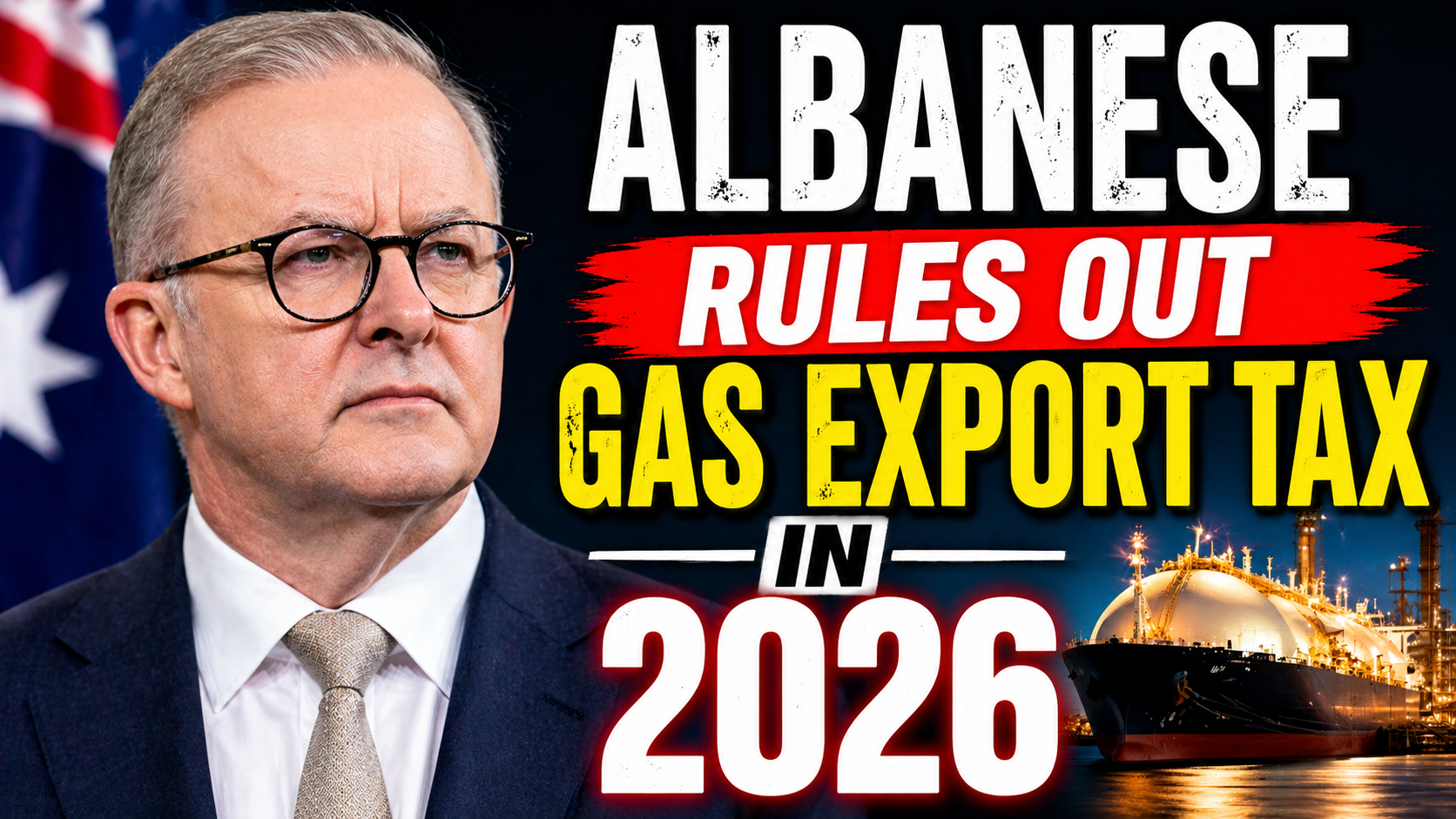
Prime Minister Anthony Albanese’s decision to rule out a new gas export tax in 2026 has thrown Labor’s energy‑and‑tax strategy back into the spotlight, as the government faces a tightening debate over how to balance household relief, fiscal discipline, and the role of the gas industry in Australia’s transition. The move comes ahead of the 2026 federal budget, with Canberra effectively killing off a 25 per cent levy on liquefied natural gas (LNG) exports that had been gaining momentum among independents, the Greens, and community‑advocacy groups. The resulting clash is not just about tax rates; it is about what kind of energy‑and‑equity story Labor wants to tell heading into the next election cycle.
Why the gas export tax was on the table
The proposal at the centre of the debate is a 25 per cent ad‑valorem tax on the value of gas exports, not a direct tax on the companies’ overall profits. The idea has been championed by independent Senator David Pocock, the Australian Greens, and several unions and think tanks, including the Australia Institute, which has argued that such a levy could raise tens of billions of dollars over time while gently nudging exporters to prioritise the domestic market. Advocates say the windfall revenue could be used to fund targeted household‑bill relief, bolster renewables‑and‑storage investment, and chip away at the cost‑of‑living pressures that continue to weigh on many Australians.
The premise is twofold. First, that foreign‑owned and domestic gas companies have earned extraordinary profits from high global LNG prices, especially in the wake of Middle East supply disruptions and European energy‑market volatility. Second, that the Australian public has seen relatively little benefit from that windfall, even as many households feel the strain of high gas and electricity bills. A 25 per cent export tax, in this view, is a way to rebalance the distribution of gas‑sector gains without dismantling the entire industry. Some analysts even suggest that the tax could, paradoxically, increase gas supply to the domestic market: if the export price is effectively discounted by the levy, producers may find it more attractive to sell to Australian consumers instead.
Albanese’s “no‑tax” position in 2026
Against that backdrop, Albanese’s stance is clear: there will be no new tax on gas exports in the 2026 federal budget. The government is reported to be “poised to kill off” the idea, echoing the industry’s longstanding argument that exporters are already paying substantial taxes and royalties and that additional burdens could deter investment and undermine Australia’s position as a reliable LNG supplier. The official line is that gas companies contributed around 22 billion dollars in taxes and royalties last year, and that the sector underpins tens of thousands of jobs, from regional Western Australia to Gladstone and Darwin.
The government’s rationale rests on several pillars. One is energy security: as global oil and LNG markets remain volatile in 2026, Canberra is wary of doing anything that might make Asian buyers doubt the reliability of Australian supplies. Countries such as Japan, South Korea, and Malaysia are heavily reliant on Australian LNG, and the government argues that promising stable, predictable access is a key part of Australia’s broader diplomatic and economic strategy. A new export tax, ministers say, could be interpreted as a sign of policy instability, potentially discouraging long‑term contracts and infrastructure investment.
A second pillar is fiscal‑prudence pragmatism. The Albanese government is wrestling with a non‑trivial deficit and a crowded agenda of spending pressures, from aged‑care and housing to defence and climate‑related programs. While the potential revenue from a 25 per cent export tax is large on paper—some estimates put it in the multi‑billion‑dollar range annually—Treasury and ministerial briefings have judged that the political and economic costs may outweigh the gains. The preferred approach, officials say, is to keep the broad tax‑and‑royalty framework steady and focus on narrower, targeted measures to ease household pain.
The political backlash from the left
The decision to rule out the export tax has immediately sharpened the political fault line between Labor and its cross‑bench allies. Senator Pocock, the Greens, and various community groups have accused the government of “caving to gas companies” and echoing industry talking points at a moment of heightened cost‑of‑living pressure. Greens and independent senators argue that the gas sector has already benefited from generous tax treatment and long‑term concessions, and that a 25 per cent levy would simply ensure Australians share in some of the windfall profits that have been accruing offshore.
The intensity of the backlash is also tied to the broader narrative of fairness and climate‑transition justice. The Greens and many advocates frame the export‑tax debate as part of a larger project to re‑assert public control over natural‑resource revenues and redirect them toward renewables, energy‑efficiency programs, and support for low‑income households. For them, the government’s reluctance to impose the tax looks like a retreat from the more assertive stance on “big end of town” taxation that Labor has occasionally signalled in the past. Some analysts suggest that the government may be trying to avoid a repeat of the kind of protracted, policy‑wrecking battles seen in earlier energy‑tax controversies, but the move has nonetheless left many progressive voters feeling let down.
Labor’s preferred energy‑and‑bill‑relief strategy
In place of a gas‑export‑tax windfall, the Albanese government is leaning on an alternative mix of measures to manage energy‑and‑cost‑of‑living pressures. The core of this strategy is a three‑pronged approach: a steady, if cautious, expansion of renewables and storage; tweaks to the existing gas‑tax and regulatory framework that stop short of a full‑blown export levy; and targeted household‑support programs funded out of general‑tax revenue rather than a sector‑specific tax grab.
On the renewables front, Labor continues to point to expanding wind and solar capacity, major transmission‑upgrade projects, and the continued rollout of demand‑response and time‑of‑use‑pricing schemes. The government argues that the combination of more renewables, battery‑and‑hydrogen‑storage projects, and smarter grid management will gradually ease wholesale‑power‑price spikes, even if retail bills remain sensitive to global gas and oil prices. The message is that the long‑run solution to high bills lies in deepening the energy transition, not in short‑term tax‑and‑subsidy tinkering.
On the gas‑sector side, the government is signalling that the existing tax and regulatory settings will be reinforced but not radically overhauled. That means maintaining the Petroleum Resource Rent Tax, corporate‑income‑tax treatment, and state‑based royalties, while monitoring the market for signs of supply‑tightness and price‑gouging. There is also an emphasis on gas‑supply‑safeguard rules—mechanisms that require exporters to ensure a minimum level of gas is retained for the domestic market—but these are not being supplemented with a 25 per cent export tax in 2026.
When it comes to household relief, Labor’s 2026‑style playbook leans on a combination of modest, targeted schemes rather than a single blockbuster measure. These include expanded energy‑efficiency and insulation‑upgrade programs, support for low‑income households with power‑bill‑reduction schemes, and broader cost‑of‑living offsets such as adjustments to rent‑assistance payments and certain tax‑threshold settings. The government argues that this approach is more fiscally‑sustainable and less likely to distort the gas market than a large‑scale export levy, even if it is less politically flashy.
The broader debate over resources, equity, and the transition
The gas‑export‑tax dispute is part of a wider conversation about how Australia manages its resource‑wealth in an era of climate‑transition urgency. On one side are voices arguing that the nation’s gas and minerals should be leveraged to generate substantial public‑benefit revenues, especially in the form of targeted redistribution to households and communities that are bearing the brunt of higher fuel and power prices. They point to overseas models where resource‑rent or excess‑profits‑style taxes have been used to fund social‑welfare and infrastructure programs, arguing that Australia can adopt a similar approach without driving away investment if the design is careful.
On the other side are those who warn that heavy‑handed taxation or export‑linked levies risk scaring off capital and undermining Australia’s energy‑security and trade‑relations. Industry representatives argue that gas‑field development, LNG terminals, and associated infrastructure require multi‑decade planning; anything that smells like a one‑off windfall‑grab law can chill that investment. Some energy‑security experts counter that a well‑designed export tax need not be a blunt instrument and that the assurance of stable, long‑run regimes for both taxation and supply‑safeguards can actually strengthen Australia’s position as a reliable partner.
For the Albanese government, the 2026 stance is an attempt to thread the needle. It wants to be seen as a competent manager of the energy transition, protecting jobs and investment while gradually reshaping the mix toward renewables. At the same time, it is under pressure from the left to take a tougher stance on windfall profits and from the right to avoid measures that could be framed as anti‑business. The decision to rule out the gas‑export tax in 2026 signals that, for now, the government is erring on the side of caution and stability, even if it means absorbing the political heat from the crossbench and community‑advocacy groups.
What this means for bills, investment, and the 2028 election
For Australian households, the immediate implication of the government’s position is that any relief on gas and electricity bills will come from the existing policy‑mix rather than a new tax‑funded windfall. That means slower, incremental gains through expanded renewables, grid‑upgrades, and efficiency programs, plus targeted support that is unlikely to eliminate the gap between domestic and export‑gas prices. The government’s hope is that the combination will be enough to keep pressure on prices over time, even as global gas markets remain volatile.
For the gas industry, the message is more reassuring. Exporters such as Woodside, Chevron, and others will not face a 25 per cent export levy in the 2026 budget, at least. The government’s stance signals that it is prioritising long‑term investment certainty and export‑market stability over a one‑off, headline‑grabbing tax grab. That may help keep the pipeline of new gas‑field and LNG‑terminal projects flowing, although companies will still be under pressure to justify their domestic‑supply‑pricing and to align with the government’s broader climate‑goals.
As the 2028 election cycle looms, the gas‑export‑tax debate may resurface in one form or another. If energy‑prices spike again or if cost‑of‑living pressures intensify, the political case for a windfall‑style levy may grow stronger, especially among progressive voters. Greens‑aligned senators and independents may push the idea once more, while industry groups are likely to dig in. In the short term, however, Albanese’s 2026 decision has cemented Labor’s current energy‑and‑tax philosophy: a cautious, incremental transition, with no new tax on gas exports, and a reliance on the existing tax base and targeted programs to try to keep bills under control.

Nirti Singh is a news writer and digital content contributor at KorakoSpecklePark, covering key stories and regional developments across New Zealand and Australia. Her work focuses on clear, fact-based reporting, ensuring readers receive accurate and timely information.