
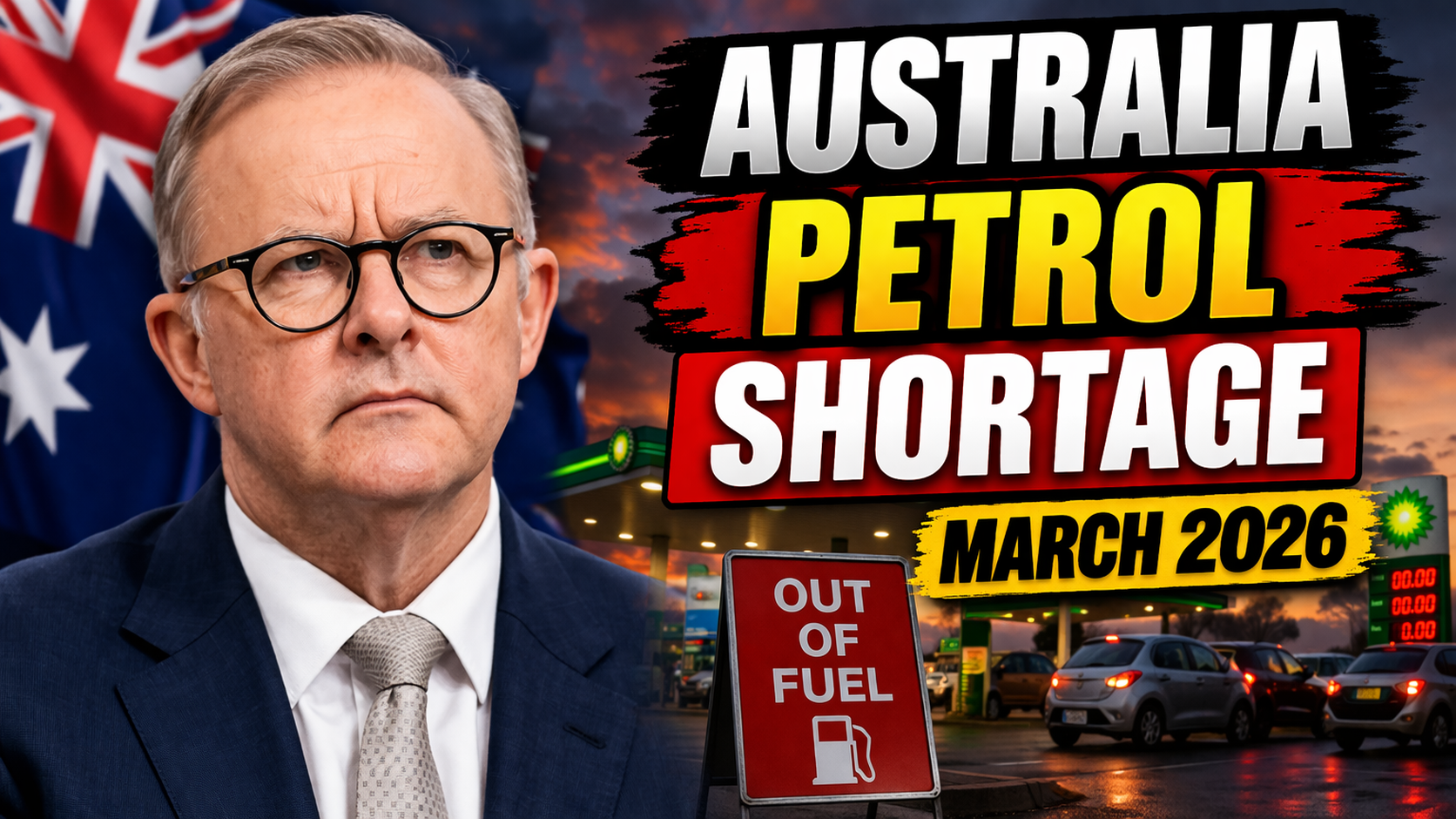
Australia is entering one of the most concentrated fuel‑disruption episodes in its recent memory, with New South Wales service stations running dry and the fuel‑excise‑cut debate reaching a boiling point in Canberra. March 2026 has seen hundreds of petrol and diesel outlets across the country report empty bowsers, not because of a complete national shortage of oil, but because of a tangled web of supply‑chain strain, market‑structure shifts, and geopolitical disruption in the Middle East. As trucks line up outside isolated country towns with no fuel left and city‑dwellers see queues stretch around the block, the political question is no longer just about price—it is about how the government should respond when Australians are literally running out of petrol at the pump.
How the Petrol Shortage Is Unfolding
Across New South Wales, the situation is stark: well over one hundred service stations have reported diesel shortages, with dozens also running out of at least one other fuel type such as unleaded petrol or premium fuel. Maps released by state authorities show clusters of affected stations not in one isolated region, but across multiple metropolitan corridors, regional hubs, and rural shires. In some towns, the only remaining option is a single truck‑stop or large branded outlet that has maintained supply through long‑term contracts, while smaller independent and supermarket‑linked stations have simply gone dry.
This is not a classic “empty tank” crisis caused by closed refineries alone. Australia still has several operating refineries, and it continues to receive scheduled shipments of refined fuel by sea. The core problem is timing and distribution: international shipping routes have been rerouted or delayed because of conflict‑related insurance spikes and port‑congestion risks in the Middle East, while local wholesalers are prioritising larger, more profitable outlets. That has created a classic “bottleneck” effect where fuel exists in the system, but it is not reaching the retail level fast enough to keep up with both normal demand and a wave of panic buying.
Why Panic Buying Is Amplifying the Crisis
At the heart of the March 2026 shortage is a surge in consumer behaviour. As news reports and social media clips of empty pumps circulated, drivers began topping up more frequently, filling tanks beyond their usual needs, and some even hoarding fuel in containers at home. This has pushed daily demand percentages up sharply in states like New South Wales and Victoria, where roughly one in ten service stations have reported outages of at least one fuel type.
The problem is particularly acute for independent retailers and smaller operators who rely on spot‑market purchases or short‑term supply arrangements rather than long‑term contracts with major wholesalers. When big players stockpile or reserve allocations to protect their own branded networks, independents are left scrambling for whatever is left, often at higher prices. This has turned a localized supply‑chain wobble into a patchwork of visible shortages, with long‑distance truckers and primary‑producers suddenly facing the risk of being stranded without diesel.
The Role of the Middle East Conflict
Underlying much of the current crunch is the ongoing war‑related disruption in the Middle East. Insurance premiums for tankers moving through key chokepoints have risen, and some shipping firms have chosen alternative routes or delayed voyages, which lengthens the time between refinery output overseas and discharge at Australian terminals. Because Australia now imports a significant share of its refined fuel—especially diesel—any delay on the water translates directly into pressure at the bowser.
Energy officials have confirmed that several scheduled deliveries slated for April have been cancelled or postponed, even though expected shipments so far have arrived as planned. The cumulative effect is that the country’s buffer stocks are being drawn down faster than normal, and the pipeline between ship and pump is stretched thin. For a nation that still runs mostly on liquid fuel, that means even a modest drop‑off in delivery cadence can create the appearance of a broader shortage, especially when combined with higher demand and fragmented distribution.
The Fuel Excise Debate Enters the Spotlight
As empty pumps multiply and headlines scream about record‑high fuel prices, the political debate has pivoted sharply to the federal fuel excise. The current excise rate on petrol is around half a dollar per litre, and on diesel it is effectively in the same ballpark when other charges are factored in. Opposition and cross‑bench lawmakers are now calling for a substantial cut—often framed as halving the excise for three to six months—arguing that this would put immediate money back in consumers’ pockets and ease the psychological pressure on drivers already anxious about shortages.
The government, however, has pushed back. The Prime Minister has indicated that a blunt excise cut risks repeating some of the mistakes of the COVID‑era tax‑relief packages, which were criticised for inflating demand without fixing structural bottlenecks. Internal advice reportedly warns that cutting excise could push fuel‑prices temporarily lower, but it would not magically increase the amount of petrol and diesel arriving by ship; it could even encourage more panic buying and further strain already‑stretched supply chains. Instead, the government is leaning toward targeted measures such as temporary relaxation of fuel‑quality standards, more flexible distribution rules, and stronger penalties for price‑gouging.
What a Fuel Excise Cut Would Actually Do
From an economic‑policy standpoint, a fuel excise reduction is a classic demand‑side lever. Lowering the tax component at the bowser effectively shifts the price curve downward, which can increase quantity demanded and, in some models, stimulate short‑term economic activity by reducing transport‑cost pressures. In theory, a temporary cut could help households and small businesses cope with the spike in pump prices caused by the Middle East‑linked supply shock.
However, economists and energy analysts caution that excise cuts are not a cure‑all. If the bottleneck is not price but physical availability, then cheaper fuel may simply mean more people racing to fill up sooner, exhausting limited stocks faster. There is also a risk that the tax‑cut benefit is partly captured by retailers and wholesalers if they do not fully pass the saving on, and that the government may later struggle to claw back the lost revenue without another political hit. In that context, many experts argue that excise policy should be used cautiously and paired with supply‑side measures such as stock‑release rules, anti‑hoarding provisions, and better coordination between major fuel‑suppliers and independent retailers.
The Government’s Alternative Toolkit
Instead of a blanket excise cut, the federal and state governments are deploying a more surgical toolkit. The most visible move has been the temporary relaxation of diesel‑quality standards, allowing for a slightly broader range of fuel specifications to be sold for six months. This is intended to increase the pool of usable diesel that can be brought into the market, especially for agriculture, trucking, and rural‑service vehicles. Officials have also adjusted minimum stockholding rules, effectively giving wholesalers a few extra days of buffer to smooth out lumpy delivery schedules.
At the same time, consumer‑behaviour messaging has become a central part of the strategy. Authorities are urging drivers to purchase only the fuel they genuinely need, to avoid topping up tanks each time they pass a station, and to choose off‑peak hours when possible. Some states are even considering emergency‑powers triggers under energy‑supply legislation, which would allow authorities to impose temporary restrictions on bulk‑purchasing or queuing if shortages worsen. These measures are being framed as a way to stretch existing stocks without creating new price distortions or long‑term tax‑revenue liabilities.
Who Is Feeling the Shortage Most
The impact of the petrol and diesel shortage is not evenly distributed. In New South Wales, the hit falls hardest on people who live or drive in areas with limited retail choice: outer‑metropolitan fringes, regional towns, and remote communities where the closure of a single service station can leave residents with no easy alternative. Truck drivers and freight operators are also on the front line, as even a small gap in diesel supply can strand entire routes and delay just‑in‑time deliveries of food, fuel, and medical supplies.
Farmers and primary producers are another key group affected. Many rely on diesel‑powered machinery for planting, harvesting, and irrigation, and interruptions in fuel supply can force them to delay critical operations or burn through emergency reserves. In some regions, mobile‑fuel‑delivery services have been scaled up to help these users, but the higher cost and logistical complexity mean they are not a perfect substitute for a stable local‑supply network. Urban commuters, by contrast, are more likely to feel the crisis through higher prices and longer queues than through actual out‑of‑fuel scenarios, although even a single dry station in a busy corridor can quickly become a flashpoint for frustration.
Looking Ahead: Supply, Policy, and Public Confidence
As March 2026 moves toward its final weeks, the immediate priority is preventing the situation from tipping into a full‑blown national‑distribution crisis. That means ensuring that future shipments, especially those now being rerouted or delayed, are safely received and processed; that wholesalers distribute fuel more equitably across independent and branded outlets; and that consumers avoid hoarding behaviour that can turn a hiccup into a hard cliff.
Beyond the immediate crisis, the episode is likely to trigger a broader rethink of Australia’s fuel‑supply security. The closure or downsizing of several domestic refineries in recent years, combined with growing reliance on imported refined fuel, has left the country more exposed to external shocks. The current shortage may force policymakers to confront questions about strategic reserves, minimum‑stock requirements, and whether the government should consider a more active role in coordinating fuel‑distribution during emergencies.
For the public, the key takeaway is that the March 2026 petrol shortage is less about a vanished fuel supply and more about a stretched, complex system being tested by geopolitics, market‑structure changes, and human behaviour. The debate over cutting fuel excise will continue, but any lasting solution will likely hinge not on a single tax adjustment, but on a combination of smarter stock‑management, clearer communication, and policies that keep the lights—and the engines—running even when the world outside becomes more volatile.

Nirti Singh is a news writer and digital content contributor at KorakoSpecklePark, covering key stories and regional developments across New Zealand and Australia. Her work focuses on clear, fact-based reporting, ensuring readers receive accurate and timely information.