
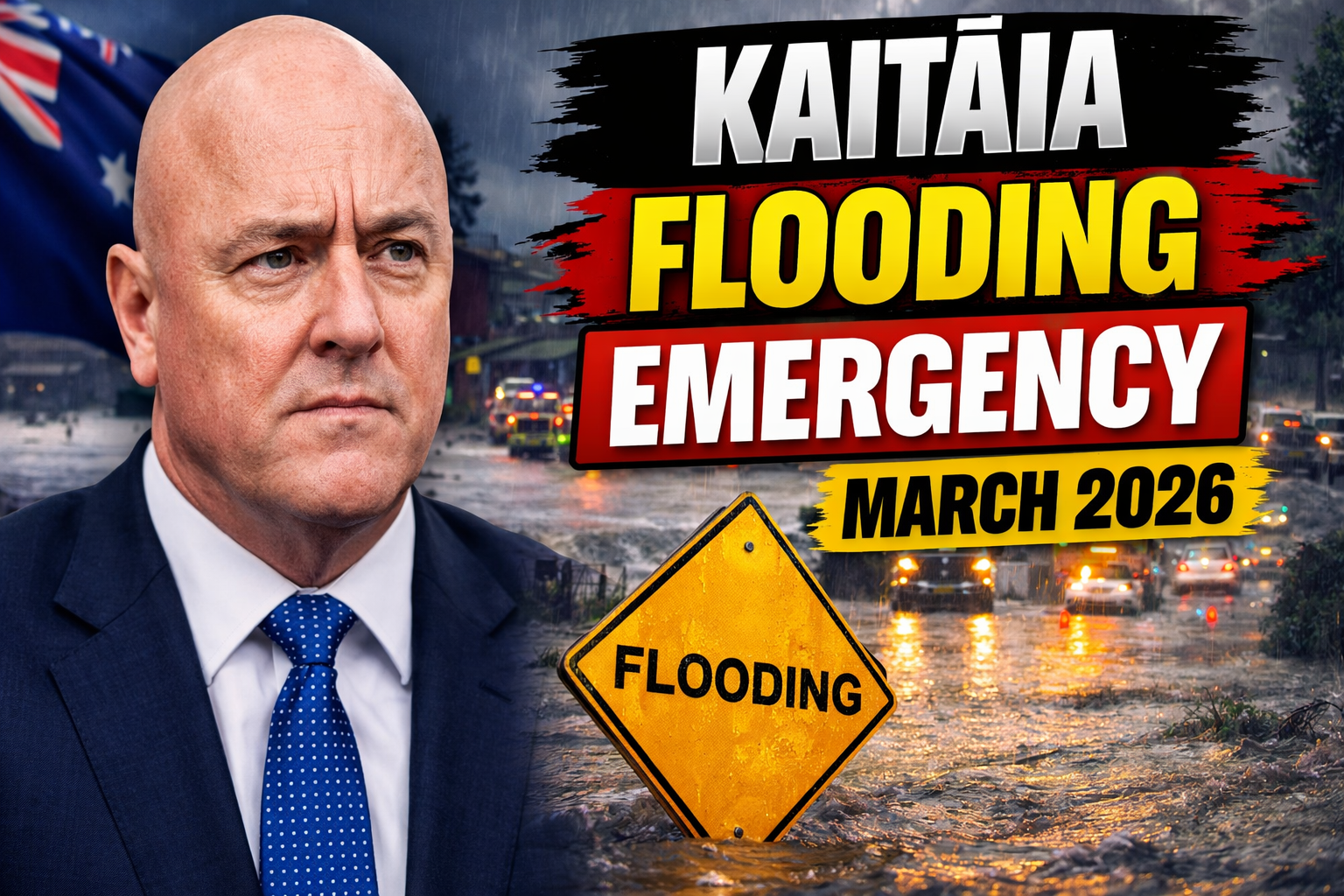
Kaitāia, the main urban centre of the Far North, became the focal point of the emergency. The Awanui River and surrounding catchments swelled to dangerous levels, with water spilling out of its banks and flooding low‑lying streets, yards, and homes. Police and Civil Defence reports indicate that between four hundred and five hundred people were evacuated from their homes over a single night, many only realising how severe the situation was when emergency services began door‑to‑door warnings.
The scale of the rainfall meant that even standard drainage systems were overwhelmed. Localised flooding turned main roads into temporary rivers, cut off some suburban streets, and left many properties partially or fully underwater. Sandbagged basements, raised furniture, and hastily moved vehicles became common scenes as residents tried to outpace the rising water, while others simply heeded the advice of officials and chose to move to higher ground or temporary shelters.
State of Emergency in the Far North
The Far North District Council declared a precautionary state of emergency on Thursday, giving emergency services and local authorities special powers to move quickly through the evolving crisis. The declaration was issued in response to severe weather that had already begun isolating communities, with around seventeen local roads closed and conditions expected to worsen overnight. The state of emergency also extended to the Whangārei District, as the same weather system pushed south along the upper North Island.
This framework allows emergency managers to co‑ordinate evacuations, restrict access to dangerous areas, and mobilise additional resources such as police, Fire and Emergency New Zealand units, and Urban Search and Rescue teams. The Far North Council has urged residents not to travel, to avoid rivers and beaches, and to stay away from floodwaters that may be contaminated by sewage and septic‑tank overflows. High‑tide timing has also been highlighted, with local tidal forecasts used to warn coastal communities about the risk of water backing up into already saturated streets.
Evacuations and Emergency Response Efforts
Evacuations in Kaitāia and the wider Far North have been both rapid and carefully coordinated. Rapid‑response teams, including Fire and Emergency NZ, police, and Civil Defence‑trained volunteers, have been fanning out through low‑lying suburbs and riverside communities, checking door to door and helping residents to higher ground or to temporary evacuation centres. Some evacuees have been moved to nearby marae, community halls, and schools, which have been opened as short‑stay shelters with sleeping spaces, basic food, and medical support.
The scale of the operation is reflected in the numbers: around five hundred people evacuated from Kaitāia alone, with additional households isolated in smaller settlements across Te Hiku (the very top of the North Island). Emergency crews have also been monitoring slip‑prone hillsides and vulnerable bridges, because the heavy rain has not only flooded rivers but also saturated soil, raising the risk of slips and road‑cut‑offs in the days following the deluge.
Damage Across the Northland Region
Beyond Kaitāia, the wider Northland region has seen significant impacts. Roads in the Far North, including rural and coastal routes, have been closed due to flooding, fallen trees, and surface damage. Some communities have effectively been cut off, with access limited to four‑wheel‑drive vehicles or emergency‑response teams. Whangārei and surrounding districts have also reported slips, localized flooding, and damage to low‑lying properties, underscoring the breadth of the storm’s reach.
In agricultural and rural areas, the flooding has hit primary producers particularly hard. Farmland has been submerged, paddocks turned into lakes, and farm infrastructure such as fences, sheds, and irrigation systems damaged. Livestock that were not moved in time have been at risk, and some farmers have had to make difficult decisions about animal welfare and the long‑term viability of paddocks that may take days or even weeks to dry out.
Power, Communications, and Infrastructure Strain
The storm has also taken a toll on basic infrastructure. Some homes and commercial properties have been left without power as high‑voltage lines and poles were affected by wind, water, and falling trees. Telecom providers have reported intermittent outages in parts of the region, with cellular and fixed‑line services disrupted where flooding has damaged equipment or cable routes.
In Kaitāia and nearby towns, disruptions to water and wastewater networks have been a key concern, especially where rising river levels and high groundwater have contaminated or overwhelmed local systems. Authorities are warning residents to treat any water that may have come into contact with floodwater as potentially unsafe unless it has been boiled or otherwise treated.
The Human Costs and Community Resilience
Behind the numbers lie deeply personal stories. Some residents returned to their homes to find living areas submerged, bedrooms ruined, and treasured belongings soaked beyond recovery. Others were unable to retrieve possessions in time, choosing instead to prioritise their safety and the safety of their families over property. For Māori communities, marae and papakāinga have become crucial refuges, providing not only shelter but also cultural and emotional support in the middle of the crisis.
First responders have described the situation as “taking a real toll” on people across the region. The Far North’s relative remoteness, combined with limited transport options, means that recovery can be slower and more challenging than in major urban centres. Volunteers, iwi leaders, and local business owners have stepped up to help, offering food, temporary accommodation, and transport to those affected, reinforcing the strong sense of community that characterises the region.
Weather Forecasts and Short‑Term Risks
Even as the most intense rainfall has passed, meteorologists are still warning of residual risks. The subtropical low that caused the flooding has moved away, but saturated ground and full rivers mean that even moderate rainfall in the coming days could trigger further flooding or slips in vulnerable areas. Coastal communities are also being urged to monitor tide schedules, since high tides can combine with residual river flow to push water even deeper into low‑lying zones.
Emergency managers are using the lull in the worst weather to inspect roads, bridges, and culverts, and to begin the process of reopening routes where it is safe to do so. However, they are also conscious that another pulse of heavy rain could quickly re‑set the situation, so the region remains on high alert rather than returning to normal.
Local Government and National Response
Local authorities in the Far North, including the Far North District Council and Kaitāia’s local leadership, are co‑ordinating relief efforts with district health boards, mental‑health agencies, and central‑government agencies. The national Ministry for Primary Industries has flagged the impact on farmers and growers, while Civil Defence and Emergency Management authorities are helping to manage evacuees, temporary accommodation, and logistical support for isolated communities.
The declared state of emergency is set to remain in place for an initial period of seven days, giving officials time to assess damage, request any additional resources, and plan for the recovery phase. That recovery is expected to be multi‑stage: first, ensuring everyone’s safety and restoring basic services; second, clearing roads and networks; and third, supporting long‑term rebuild and resilience upgrades, potentially including flood‑protection work and land‑use planning changes.
What This Means for the Far North’s Future
The March 2026 Kaitāia flooding emergency will likely be remembered as a benchmark event for the Northland region. It highlights the vulnerability of low‑lying towns and river‑adjacent settlements to increasingly intense rainfall events, which many scientists link to a warming climate and more energetic subtropical systems. For planners, the episode raises questions about where new housing and critical infrastructure should be built, how rivers should be managed, and what level of flood protection communities are prepared to invest in.
For the people of Kaitāia and the wider Far North, the immediate task is to get back on their feet—draining homes, drying out belongings, and returning to work, school, and normal life as much as possible. The deeper work—the emotional recovery, the rebuilding of confidence in local infrastructure, and the strengthening of emergency‑preparedness plans—will take longer. In the meantime, the region’s resilience, community spirit, and the efforts of emergency services will be the backbone of the response to one of Northland’s wettest and most disruptive weeks in recent memory.

Nirti Singh is a news writer and digital content contributor at KorakoSpecklePark, covering key stories and regional developments across New Zealand and Australia. Her work focuses on clear, fact-based reporting, ensuring readers receive accurate and timely information.