
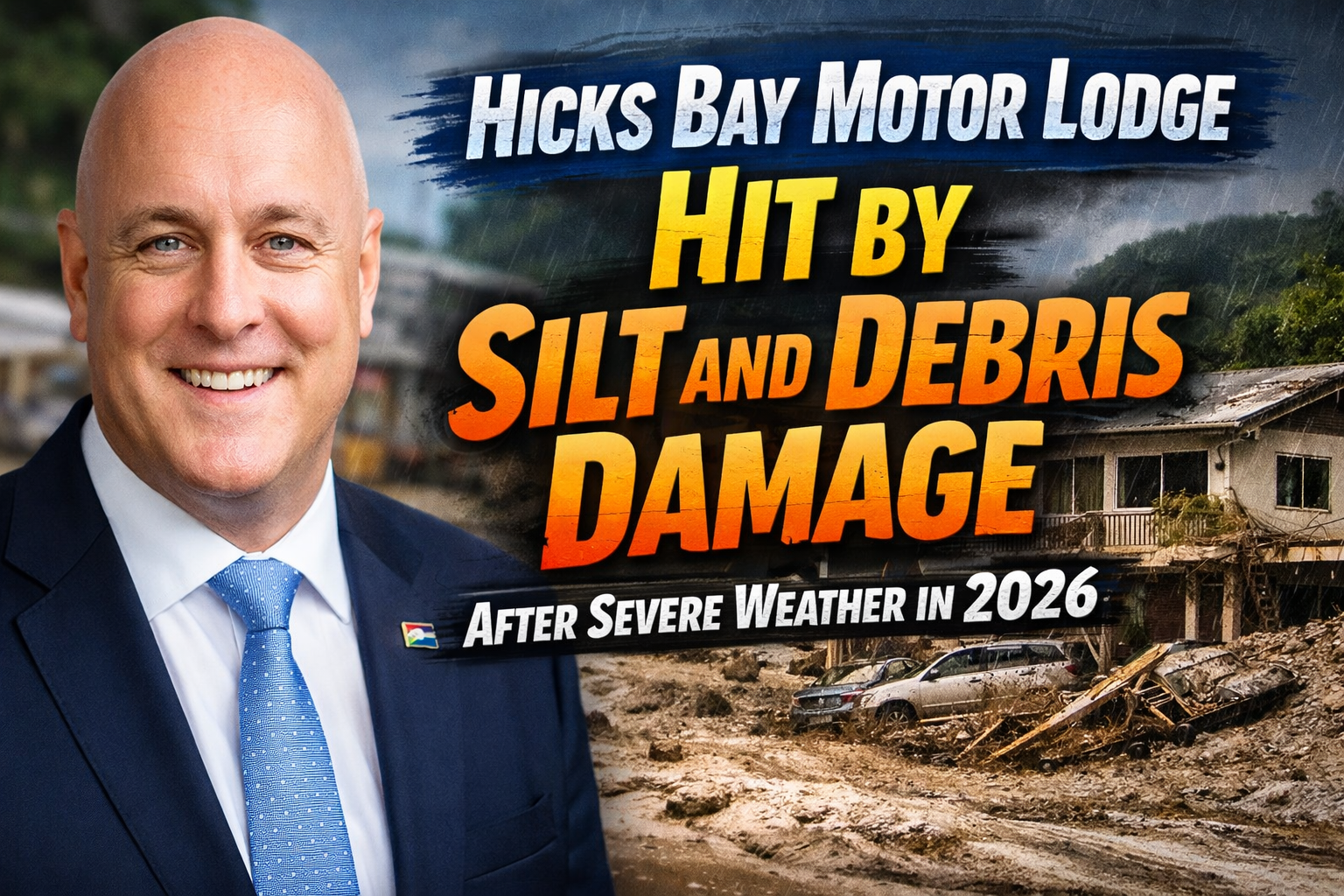
A massive landslip crashed into Hicks Bay Motor Lodge on New Zealand’s East Cape, burying parts of the property under two feet of silt, water, and debris during a ferocious storm in late January 2026. This incident highlights the vulnerability of coastal communities to extreme weather, leaving the lodge’s staff and guests to navigate chaos while broader recovery efforts unfold.
Storm Origins and Timeline
Intense rainfall battered the Gisborne District and East Cape region starting Wednesday evening, triggering widespread flooding, slips, and road closures. Hicks Bay, a remote coastal gem known for its scenic motel accommodations, bore the brunt when a nearly 200-square-meter slip descended around 3am Thursday.
The deluge dumped up to 190mm of rain in Hicks Bay alone, far exceeding typical summer patterns and overwhelming drainage systems. State Highway 35, the vital lifeline connecting the area to Gisborne, succumbed to multiple slips, stranding communities like Te Araroa and Hicks Bay.
This event echoes past disasters like Cyclone Gabrielle in 2023 but locals describe it as exponentially worse, with unstable hillsides unleashing trees, mud, and boulders across properties and roads.
Eyewitness Accounts
Georgina Taiapa, the chief chef at Hicks Bay Motor Lodge and a member of the local rural fire brigade, was on-site when disaster struck. Staying overnight to shelter guests and potential evacuees, she roused about five visitors and herded them into the restaurant for safety amid roaring water and crashing debris.
As dawn broke, Taiapa surveyed the wreckage: sludge blanketed the grounds, with relentless water still gushing from the slip site. “There was just water and debris and silt everywhere,” she recounted, noting massive trees lodged where the land had sheared away. Despite her own home flooding near the Wharekahika River—marking the worst in her 16 years locally—she focused on guests, brewing coffee and distributing meals.
Owner Tony Holden confirmed eight rooms received yellow stickers from council inspectors, signaling restricted access pending structural checks. Power flickered back by Friday afternoon, but Taiapa planned to bunk at the lodge indefinitely, her resilience embodying the area’s spirit.
Damage Assessment at the Lodge
The motor lodge, a longstanding fixture offering harbor views and family-friendly stays, faced direct hits from the slip crossing SH35 into its rear. Silt piled two feet deep around affected units, infiltrating rooms and the surrounding gardens. Water continued flowing Friday, complicating cleanup.
Guest areas fared better, with the restaurant serving as a makeshift command center. Initial reports indicate no serious injuries at the property, though formal engineering assessments awaited helicopter delivery due to road inaccessibility.
The table below outlines key damage categories:
| Damage Type | Description | Affected Areas |
|---|---|---|
| Silt and Debris | Two feet deep; trees and boulders embedded | Rear rooms, grounds |
| Water Inundation | Ongoing flow from slip; flooding in units | Eight yellow-stickered rooms |
| Structural Concerns | Potential wall and foundation compromise | Slip impact zone |
| Utilities Disruption | Power restored; water supply uncertain | Entire property |
| Guest Impact | Temporary relocation; no injuries reported | Five sheltered guests |
Beyond the lodge, four nearby homes sustained similar battering, underscoring the slip’s ferocity.
Broader Regional Devastation
The storm’s wrath extended beyond Hicks Bay. Coastal stretches from Pōtaka to Tikitiki on SH35 remained severed, with NZTA estimating 500,000 cubic meters of material to clear—weeks of grueling work ahead. Punaruku saw a colossal slip obliterate road sections near Te Araroa camp.
Gisborne District Council reported over 90 households isolated, though not all needed aid immediately. Floodwaters swept vehicles away in Te Araroa, forcing one family onto their roof for hours before rescue. Emergency Minister Mark Mitchell likened scenes to a “warzone,” with seven roof rescues in Hicks Bay alone.
Power outages hit over 250 homes overnight Thursday, while marae swelled with evacuees. Rainfall totals amplified by saturated soils from prior wet weather, turning hillsides into rivers of mud.
Emergency Response Efforts
Helicopters became lifelines, with four drop-offs Friday delivering building teams, welfare checks, medical supplies, and food. Gisborne Mayor Rehette Stoltz coordinated from afar, prioritizing water, electricity, and sustenance for cut-off pockets.
Council CEO Nedine Thatcher Swan deployed community link teams, revealing intra-area isolations. By midday, assessments pinpointed needs, with more flights scheduled. Fire brigades, like Taiapa’s, bridged gaps until professional aid arrived.
Civil defense urged avoiding slips, warning of unpredictable aftershocks from unstable land. Welfare centers and marae hosted over 60 people Thursday, providing hot meals and shelter amid the deluge.
Community Resilience
Marae stepped up as lifelines, distributing aid and emotional support in true East Cape tradition. Hicks Bay’s tight-knit fabric shone: locals shared videos of flooded homes, yet focused on evacuation and safety.
Taiapa’s stoicism—”It is what it is”—captures the mindset. Guests, though rattled, praised staff hospitality, with the lodge stocked for days. This communal grit, honed by frequent weather woes, sustains hope amid loss.
Long-Term Recovery Challenges
Restoring SH35 demands heavy machinery battling massive slips, delaying normalcy for weeks. The lodge faces insurance claims, silt removal, and rebuilds—potentially shuttering rooms long-term.
Affected families, like the roof-perched Te Araroa household who lost everything bar soaked clothes, confront rebuilding from scratch. Economic ripples hit tourism, a pillar for Hicks Bay’s motel and fishing economy.
Council grapples with infrastructure audits, while farmers eye eroded lands. Funding from national relief pools will be crucial, alongside volunteer labor.
The table below compares recovery timelines:
| Aspect | Short-Term (Days) | Medium-Term (Weeks) | Long-Term (Months) |
|---|---|---|---|
| Road Clearance | Emergency access | Full SH35 reopening | Slope stabilization |
| Lodge Repairs | Power/water fix | Silt removal | Structural rebuild |
| Community Aid | Food drops | Welfare centers | Home reconstructions |
| Economic Restart | Local trade | Tourism return | Full operations |
Lessons for Climate Adaptation
This calamity spotlights escalating weather extremes, with climate models predicting wetter East Cape summers. Investments in resilient infrastructure—elevated roads, slip barriers, early warning systems—grow urgent.
Communities advocate for better drainage, hillside planting, and emergency stockpiles. Policymakers must accelerate funding for vulnerable regions, learning from Gabrielle’s scars.
Hicks Bay Motor Lodge’s ordeal, while devastating, galvanizes resolve. As cleanup dawns, the lodge and surrounds rebuild stronger, a testament to human endurance against nature’s fury.

Nirti Singh is a news writer and digital content contributor at KorakoSpecklePark, covering key stories and regional developments across New Zealand and Australia. Her work focuses on clear, fact-based reporting, ensuring readers receive accurate and timely information.