
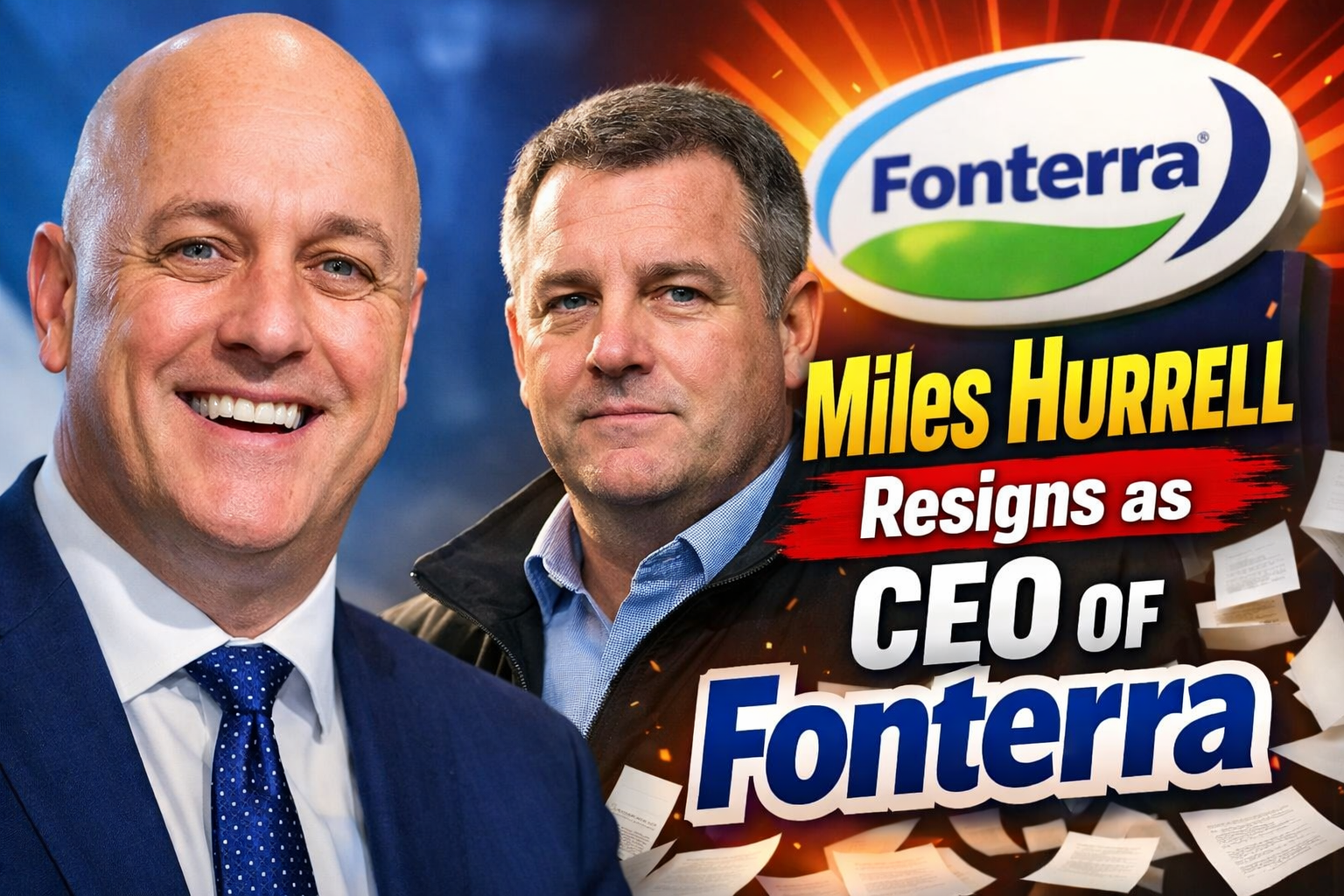
Miles Hurrell’s resignation as CEO of Fonterra marks a pivotal moment for New Zealand’s dairy giant, ending an eight-year tenure that transformed the cooperative from financial distress to renewed stability. Announced recently, the departure comes amid strategic milestones like the major divestment to Lactalis, signaling a new chapter for the world’s largest dairy exporter.
Announcement and Timeline of Departure
Fonterra’s board chair Peter McBride confirmed Hurrell’s resignation after 25 years with the company, including eight leading as CEO since 2018. He will serve a six-month notice period to ensure a smooth handover, with the board aiming to appoint a successor within months. McBride praised Hurrell’s “courageous leadership” in resetting the business, improving finances, and restoring farmer confidence.
The timing aligns with the completion of key deals, including the 2.4 billion dollar sale of Fonterra’s consumer unit to French dairy firm Lactalis. This allows the co-op to refocus on core strengths: producing high-value ingredients from New Zealand milk for global markets. Hurrell himself noted the privilege of his long career, expressing readiness for personal next steps while leaving Fonterra on solid foundations.
Hurrell’s Tenure: Achievements and Challenges
Hurrell stepped into the role amid turmoil. His predecessor, Theo Spierings, had expanded aggressively into consumer products and China, but mounting losses from failed investments eroded trust. Appointed to steady the ship, Hurrell orchestrated a strategic reset: divesting non-core assets, streamlining operations, and prioritizing financial discipline.
Under his watch, Fonterra returned to profitability, shedding loss-making units and rebuilding balance sheets. Farmer payouts stabilized, climbing from lows around 4 dollars per kilogram milk solids to sustainable levels above 7 dollars in strong seasons. Global supply chain efficiencies cut costs, while ingredient sales to Asia and Europe surged.
Challenges persisted: volatile milk prices, trade barriers, and sustainability pressures tested resolve. Hurrell navigated COVID disruptions, pushing digital transformation and emissions reductions. Critics noted slower consumer brand growth, but divestments freed capital for B2B focus.
| Key Milestones Under Hurrell | Year | Impact |
|---|---|---|
| CEO Appointment | 2018 | Initiated business reset |
| divestment Program Launch | 2019 | Sold non-core assets |
| Profitability Return | 2020-2022 | Positive earnings resumed |
| Lactalis Consumer Deal | 2026 | 2.4B revenue, core refocus |
| Farmer Payout Peaks | 2023-2025 | Record highs post-reset |
Background and Rise of Miles Hurrell
A Fonterra lifer, Hurrell joined in 2001, climbing through commercial and strategy roles. By 2018, his deep operational knowledge positioned him for the top job during crisis. Early 50s, Kiwi-born, he balanced farmer roots with global savvy, often engaging directly with shareholders at field days.
His style—decisive yet consultative—earned respect amid co-op politics. Personal anecdotes highlight commitment: long hours during payouts, hands-on crisis response. Post-Fonterra, speculation swirls around boards, consulting, or agribusiness ventures.
Fonterra’s Strategic Direction Post-Resignation
The resignation caps Hurrell’s reset phase, entering “implementation” of a leaner model. Core pillars: premium ingredients like casein, UMF honey blends, and functional proteins for health foods. Asia remains key, with China demand rebounding post-pandemic.
Sustainability ramps up—net zero by 2050 commits drive regen ag trials. Capital structure evolves: farmer shares in equity units stabilize ownership. Global mergers like Lactalis open distribution doors without ownership dilution.
New leadership must tackle milk supply forecasts amid dry weather, plus competition from plant-based rivals.
| Strategic Focus Areas | Pre-Hurrell | Post-Reset |
|---|---|---|
| Business Model | Diversified/Consumer Heavy | Ingredients-Led |
| Revenue Streams | Global Packaged Goods | B2B High-Value |
| Farmer Relations | Strained | Rebuilt Trust |
| Sustainability | Emerging | Net Zero Path |
Industry Reactions from Farmers and Stakeholders
Farmers largely laud Hurrell’s exit on a high. DairyNZ chair praises financial turnaround, noting steadier payouts. Waikato farmer groups echo board sentiments: 25 years loyalty, reset success.
Stakeholders mixed: analysts applaud divestments boosting share prices, but some lament lost consumer scale. Suppliers value supply chain stability; exporters eye growth in infant formula niches.
Opposition voices rare—focus shifts to succession quality.
Implications for New Zealand’s Dairy Sector
Fonterra dominates 80 percent of NZ milk, so CEO changes ripple wide. Resignation stabilizes amid global dairy upcycle: whole milk powder auctions firm at 3,200 dollars per tonne. Rural GDP contribution—4 percent—hinges on co-op execution.
Leadership vacuum risks execution slips during volatile geopolitics, like Red Sea shipping hikes. Competitors—Synlait, Open Country—eye gaps, while Fonterra’s scale deters.
NZ dairy exports hit 22 billion dollars yearly; stability underpins trade surpluses.
| NZ Dairy Sector Stats | 2025 Value | 2026 Outlook |
|---|---|---|
| Export Revenue | 22B dollars | Steady Growth |
| Milk Production | 21B litres | Weather Dependent |
| Global Rank | #2 Exporter | Maintained |
| Fonterra Share | 80% Milk | Core Driver |
Succession Planning and CEO Search Criteria
Board’s robust process eyes internal and external talent. McBride stresses governance: regular succession reviews ensure readiness. Criteria: dairy expertise, global networks, farmer empathy, innovation drive.
Internal contenders from ingredients leadership; externals possibly agribusiness vets. Six-month window allows handover, minimizing disruption.
Interim stability via COO or chair oversight.
Economic Context: Dairy Market Dynamics
Hurrell exits amid favorable cycles. Global demand for proteins rises with population, Asia urbanization. Supply tightens via EU cuts, weather hits in Oceania.
Challenges: China slowdowns, US milk surpluses pressure powders. Currency—strong NZ dollar—tempers returns.
Fonterra’s pivot positions for value-add, less commodity exposure.
Challenges Ahead for New Leadership
Successor inherits execution risks: Lactalis integration, capex for new plants. Emissions targets demand regen shifts; water quality scrutiny intensifies.
Geopolitics—US-China trade—threatens routes. Consumer trends favor alternatives, squeezing volumes.
| Future Challenges | Priority | Mitigation |
|---|---|---|
| Sustainability | High | Regen Trials |
| Market Volatility | Medium | Hedging Tools |
| Competition | High | Innovation Pipeline |
| Farmer Retention | High | Payout Discipline |
Global Dairy Landscape and Fonterra’s Position
NZ leads in grass-fed efficiency, low footprint. Rivals: EU co-ops scale up, Arla eyes Asia. US giants consolidate; plant milks grow but stall on nutrition.
Fonterra’s B2B shift mirrors trends: Nestle, Danone outsource ingredients. Partnerships like Lactalis unlock Europe.
Farmer Perspectives: Trust Rebuilt
Hurrell’s reset mended co-op bonds frayed by losses. Payout formulas refined, feedback loops strengthened. Shareholders value transparency—quarterly updates, AGMs.
Young farmers see opportunities in equity units, succession planning.
Broader Impact on Rural New Zealand
Dairy anchors regions: Waikato, Canterbury thrive on co-op success. Jobs—30,000 direct—secure communities. Resignation underscores evolution from volume to value.
Government eyes sector for exports, emissions trade.
Looking Forward: Fonterra’s Next Chapter
New CEO inherits strong base: profitable, focused, trusted. Strategic implementation—plant upgrades, market penetration—defines era.
Hurrell’s legacy: turnaround titan, paving premium path. Dairy heartland watches, optimistic for enduring leadership.

Nirti Singh is a news writer and digital content contributor at KorakoSpecklePark, covering key stories and regional developments across New Zealand and Australia. Her work focuses on clear, fact-based reporting, ensuring readers receive accurate and timely information.