
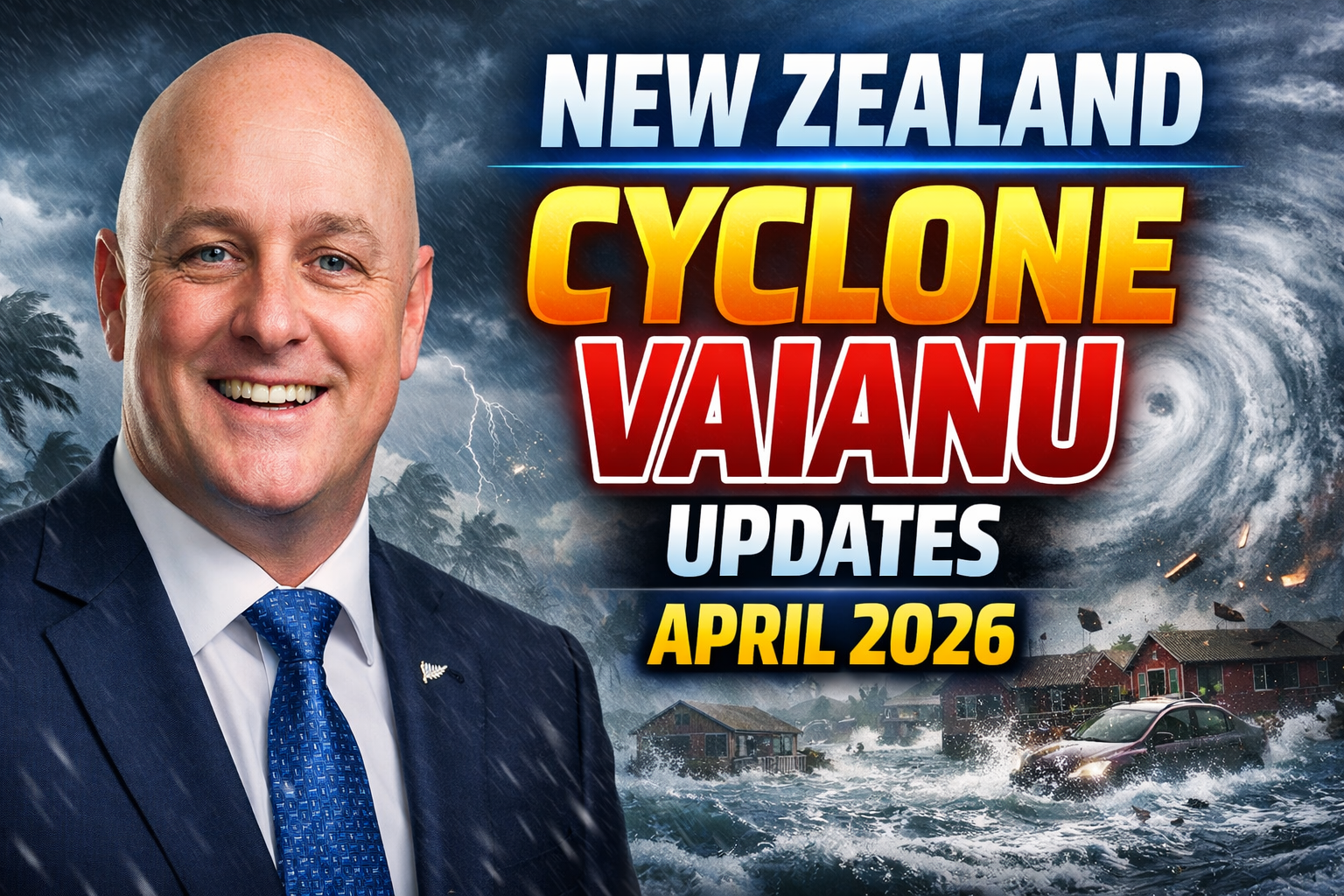
Cyclone Vaianu has moved into recovery mode after bringing severe weather to much of the North Island, with wind gusts, flooding, power outages, and emergency declarations across several regions. By Sunday night, the system had shifted southeast of the North Island, and officials began lifting some warnings as crews turned from response to cleanup.
What made Vaianu especially disruptive was the combination of damaging winds, torrential rain, and coastal inundation, which created overlapping hazards across transport, power, and housing. MetService red warnings and orange alerts were issued during the peak of the event because the storm had the potential to be life-threatening in exposed areas.
What happened
Vaianu tracked toward the top of the North Island before moving across the country, with forecasters warning that the worst effects could hit between Auckland and Coromandel. As the storm intensified, the North Island entered a period of heavy rain, strong winds, and large coastal waves that affected multiple regions at once.
By the time the cyclone passed, reports indicated wind gusts of up to 150km/h in some areas, alongside thousands of power outages in places such as Bay of Plenty and Waikato. States of Emergency were declared in Northland, Waikato including Coromandel, Western Bay of Plenty, Tauranga, Rotorua, and Hawke’s Bay.
Why red alerts mattered
MetService red warnings are reserved for the most severe weather scenarios, when conditions are expected to be dangerous and potentially life-threatening. In Vaianu’s case, red wind alerts were used because the cyclone could produce destructive gusts, falling trees, power cuts, dangerous debris, and road closures.
The red alerts were not just about rain or wind in isolation. They were meant to signal that the event could create cascading risks, including coastal inundation, slips, isolation of communities, and serious disruption to essential services.
Affected regions
The upper North Island bore the heaviest impact, especially Northland, Auckland, Coromandel, Waikato, Bay of Plenty, and Hawke’s Bay. Some of the most serious concerns were concentrated around the Coromandel Peninsula and Bay of Plenty, where red warnings were in force during the peak of the storm.
Hawke’s Bay also saw mandatory evacuations in exposed coastal communities such as Waimarama, Ocean Beach, Te Awanga, and Haumoana, while Ōhope Beach in Whakatāne District was also evacuated. That showed how quickly the cyclone shifted from a forecast threat into a direct public safety issue.
Emergency response and evacuations
Regional and local emergency declarations gave councils and agencies the powers they needed to coordinate evacuations, close roads, and mobilize recovery crews. Officials urged people to prepare early, follow civil defence advice, and avoid waiting until conditions became too dangerous to act.
The National Emergency Management Agency had warned that preparation after the storm’s arrival would be too late. That message proved important because the scale of the event meant communities needed to secure property, stock supplies, and make evacuation plans before the worst winds arrived.
Recovery on the ground
By Sunday evening, the storm had passed enough for some warnings to be lifted in places such as the Coromandel Peninsula, but recovery work was only beginning. Crews were dealing with debris, downed lines, road damage, and local flooding, while residents faced the longer task of cleaning homes and restoring normal services.
Recovery efforts were especially challenging because the event had affected so many systems at once. Power restoration, road clearing, drain checks, and welfare support all had to happen while weather conditions remained unsettled in parts of the lower North Island.
What the warnings covered
This system helps people understand not just whether weather is coming, but how serious it may become. In Vaianu’s case, red warnings signaled that the storm was not just inconvenient but potentially dangerous enough to threaten lives and infrastructure.
Flooding and road damage
Flooding became one of the major recovery issues once the cyclone had moved through. Road warnings and closures were reported in several locations, and transport disruptions added pressure to communities already dealing with power loss and damaged property.
Flood recovery tends to take longer than the storm itself because water can undermine roads, damage drainage systems, and leave behind slips and debris. Even after wind speeds ease, hidden hazards can continue to affect travel and emergency access.
Power outages and disruption
Thousands of homes and businesses lost electricity during the storm, especially in Bay of Plenty and Waikato. For many households, the immediate problem was not only the wind and rain but also the loss of heating, communications, refrigeration, and internet connectivity.
Power outages also complicate recovery because they affect pumps, traffic signals, businesses, and emergency services. When a cyclone hits multiple regions at once, restoring electricity becomes one of the top priorities after people are moved to safety.
What officials want people to know
Civil defence messaging during Vaianu focused on three things: prepare early, evacuate when told, and keep tracking weather updates. That guidance is especially important in fast-moving storm systems, where conditions can worsen much faster than people expect.
Officials also emphasized that severe weather can remain dangerous even after the center of the cyclone moves away. Coastal surges, residual flooding, slips, and fallen trees can continue to create risk for hours or even days.
Why this storm stood out
Vaianu stood out because it triggered a rare combination of red wind warnings, evacuations, emergency declarations, and widespread public alerts across a large part of the country. In terms of impact, it became a multi-hazard event rather than a single severe weather episode.
It also exposed how vulnerable the North Island can be to a storm that is not necessarily the strongest cyclone on record but still powerful enough to disrupt critical infrastructure. The lesson from Vaianu is that timing, track, and exposure can matter just as much as category label alone.
What comes next
The next phase is about clean-up, insurance claims, and restoring normal life. That includes checking roofs, clearing drains, documenting damage, and waiting for all remaining warnings to be fully lifted before resuming normal travel in exposed areas.
Longer term, Vaianu will likely renew debate about storm resilience, flood protection, drainage capacity, and emergency readiness in New Zealand. Events like this tend to push councils and households to think harder about how quickly severe weather can escalate into a national recovery challenge.

Nirti Singh is a news writer and digital content contributor at KorakoSpecklePark, covering key stories and regional developments across New Zealand and Australia. Her work focuses on clear, fact-based reporting, ensuring readers receive accurate and timely information.