
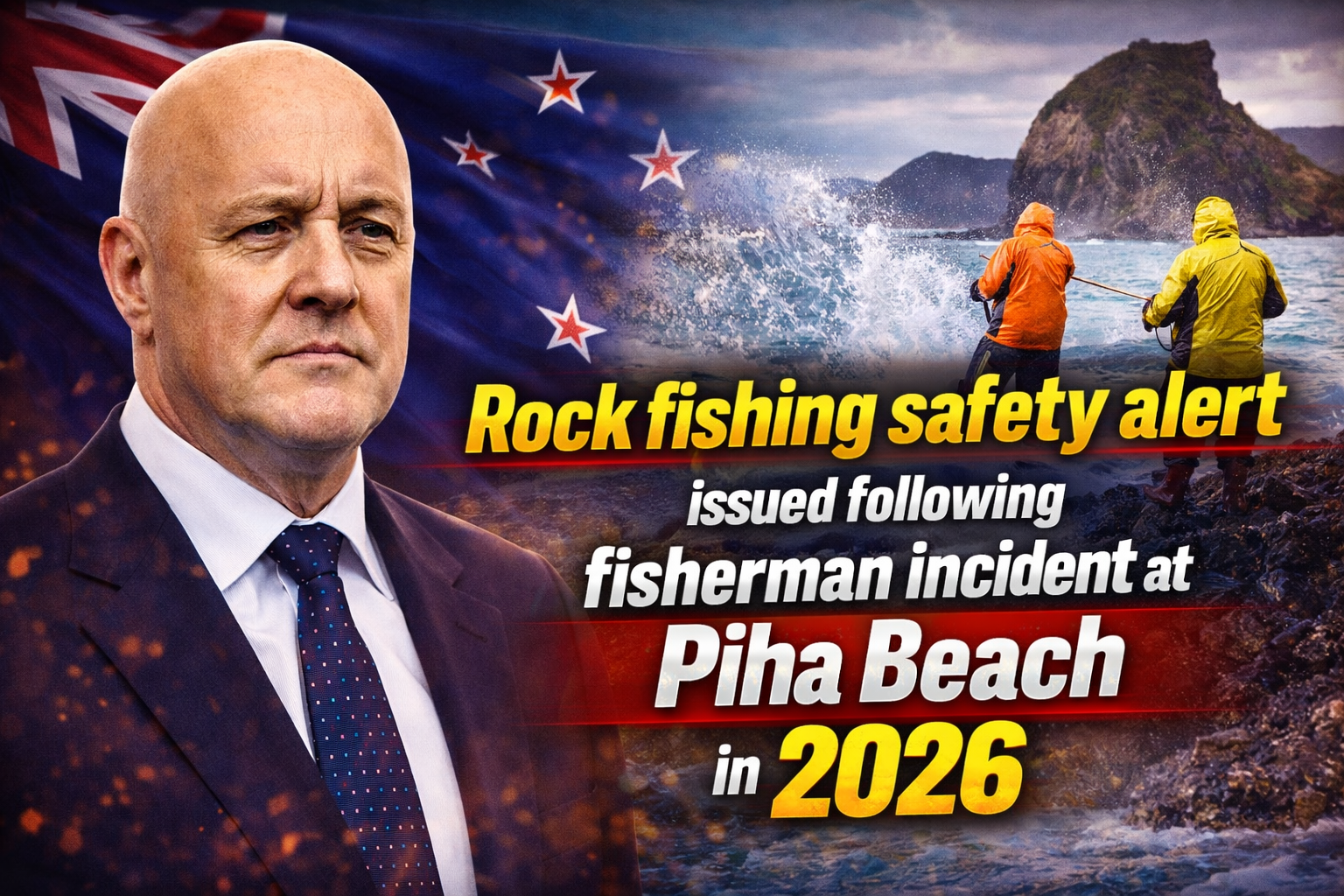
A harrowing incident at Piha Beach in early 2026 has prompted authorities to issue a urgent safety alert for rock fishers. A man was swept off rocks into treacherous waters, triggering a large-scale search and rescue operation that highlighted the deadly risks of this popular pastime.
Piha Beach: New Zealand’s Iconic Yet Deadly Shoreline
Piha Beach, located on Auckland’s west coast, draws thousands for its black sands and dramatic waves. Towering cliffs and pounding surf make it a surfing mecca, but also one of the country’s most dangerous spots. Rock fishing thrives here due to abundant snapper and kahawai, yet the same conditions—sneaker waves, slippery surfaces, and rip currents—claim lives yearly.
The beach’s geography amplifies hazards. Southern ends like Fisherman’s Rock feature jagged platforms exposed at low tide but submerged rapidly. Strong swells from the Tasman Sea roll in unpredictably, catching even seasoned locals off guard. Rescue squads log Piha as their busiest site, with over 200 callouts annually.
The 2026 Incident Unfolds
On a crisp February morning in 2026, a man in his 40s ventured onto rocks at Karekare’s Union Bay, just south of Piha. Fishing alone initially, a sudden wave knocked him into churning waters around 10:15 am. Witnesses alerted surf lifeguards from Karekare Surf Life Saving Club, sparking an immediate response.
Four rescue watercraft and an inflatable rescue boat scoured the area between Karekare and Mercer Bay. Piha’s search and rescue squad joined, battling rough seas. Despite hours of effort, the man remained missing by late afternoon, with operations scaled back as conditions worsened. Police coordinated with Coastguard, underscoring the incident’s gravity.
This event echoes past tragedies. Fisherman’s Rock has a grim history—multiple drownings since the 2000s. In this case, the solo fisher lacked immediate aid, delaying response. Surf Life Saving noted no life jacket was spotted, a recurring oversight.
Why Rock Fishing Turns Deadly
Rock fishing claims more lives in New Zealand than any other beach activity. Slippery algae-covered rocks, unexpected swells, and fatigue from holding rods contribute. A “sneaker wave”—larger than preceding sets—often sweeps fishers into deep water, where hypothermia and exhaustion set in fast.
Key dangers include:
- Unpredictable swells that double in height without warning.
- Strong currents pulling victims along cliffs.
- Isolation—many spots lack phone signal or bystanders.
- Gear like rods tangling swimmers, hastening sinking.
Data shows immigrants, particularly from Asia, face higher risks due to unfamiliar conditions. Heavy boots and winter clothing absorb water, dragging victims under.
Alarming Statistics on Rock Fishing Fatalities
New Zealand records 10-15 rock fishing deaths yearly, with Piha and nearby beaches accounting for 30%. Over the past decade, 120 lives lost nationwide, peaking in summer.
| Year | Total Rock Fishing Deaths NZ | Piha/West Auckland Incidents | Life Jackets Worn (% of Victims) | Rescues (Successful) |
|---|---|---|---|---|
| 2022 | 12 | 4 | 15% | 45 |
| 2023 | 14 | 5 | 18% | 52 |
| 2024 | 11 | 3 | 22% | 48 |
| 2025 | 13 | 6 | 20% | 55 |
| 2026 (YTD) | 4 | 2 | 12% | 18 |
Figures reveal a stubborn trend. Only one in five victims wore flotation; 70% were fishing in groups of two or fewer. West Auckland’s rate tripled since 2020, tied to population growth and tourism.
Surf Life Saving’s Urgent Safety Alert
In response, Surf Life Saving New Zealand (SLSNZ) issued a nationwide alert days after the Piha incident. “Rock fishing is killing our communities—wear a life jacket every time,” urged Northern Region GM Zac Franich. The campaign pushes four essentials: check swells via MetService, fish with a mate, carry a throw line, and don personal flotation devices (PFDs).
New mandates include free life jacket loans at patrol towers and QR-coded safety tags on rods sold locally. Apps like “Rock Fishing Safety NZ” now predict hazards using tide and wave data. Authorities stress: tell someone your plans and exact location.
Past campaigns saved lives—post-2019 drives boosted PFD use by 40%. This 2026 push targets multicultural groups via translated materials in Hindi, Mandarin, and Tagalog.
Lessons from Recent Rescues and Near-Misses
Not all stories end tragically. In a January 2026 Piha training drill turned real, off-duty lifeguards saved a swept fisher using an “angel ring” buoy. His partner radioed family, who called 111—swift action preserved life.
Contrast this with a 2025 fatality: a group ignored rising tides at Lion Rock, stranding two until dusk rescues. Lifeguards extracted them amid crashing waves, crediting torches and signals. Police echoed: preparation turns recoveries into rescues.
| Rescue Factor | Successful Cases (2024-2026) | Fatal Cases (2024-2026) |
|---|---|---|
| Life Jacket | 85% | 15% |
| Fishing Buddy | 92% | 45% |
| Phone/Alert | 78% | 32% |
| Throw Rope | 65% | 8% |
These comparisons underscore basics matter. Eagle helicopter overwatch aided multiple Piha ops, spotting floatees from afar.
Community and Expert Reactions
Locals rally post-incident. Karekare Club captain noted, “We’ve begged for signs—now it’s urgent.” Filipino communities, hit hard, host awareness barbecues. Iwi groups advocate mātauranga Māori—respecting moana’s power—pairing modern gear with cultural reverence.
Experts like Dr. Sarah Johnson, ocean safety researcher, blame complacency. “Piha’s beauty masks peril—waves refract off cliffs, amplifying force.” She pushes mandatory PFDs for high-risk sites, modeled on Australian laws cutting deaths 50%.
Businesses adapt: tackle shops bundle safety kits, boosting sales 25%. Tourism operators brief visitors, curbing novice risks.
Preventive Measures: A Step-by-Step Guide
To fish safely:
- Check forecasts—avoid swells over 1.5m or offshore winds.
- Wear a snug PFD (Level 50+), test it pre-trip.
- Fish knee-deep max, facing ocean always.
- Carry throw line, charged phone in waterproof pouch.
- Go dawn/dusk low tide; never alone.
Clubs run clinics: hands-on wave simulations build instincts. Drones now patrol hotspots, warning via loudhailers.
Government and Policy Responses
Police and WorkSafe amplify alerts, fining negligent operators. A 2026 bill proposes rock fishing licenses funding rescues—$20 annual, with safety certs. Housing Minister ties it to coastal access reviews amid climate rise.
Funding surges: $2 million for PFD subsidies, targeting low-income anglers. MetService adds “rock fisher” swell warnings.
Broader Impacts on Beach Culture
Incidents reshape Piha’s vibe. Patrols extend weekends; red flags signal no-fishing zones. Families picnic safer, but fishers adapt—platforms see dawn crowds only.
Youth programs engage tamariki early, blending fishing with safety drills. Social media #PihaSafe trends, sharing survivor tales.
Looking Ahead: Sustaining Momentum
The 2026 alert must endure beyond headlines. Annual drills, community wardens, and tech like AI wave cams promise progress. Success metrics: halve deaths by 2030.

Nirti Singh is a news writer and digital content contributor at KorakoSpecklePark, covering key stories and regional developments across New Zealand and Australia. Her work focuses on clear, fact-based reporting, ensuring readers receive accurate and timely information.