
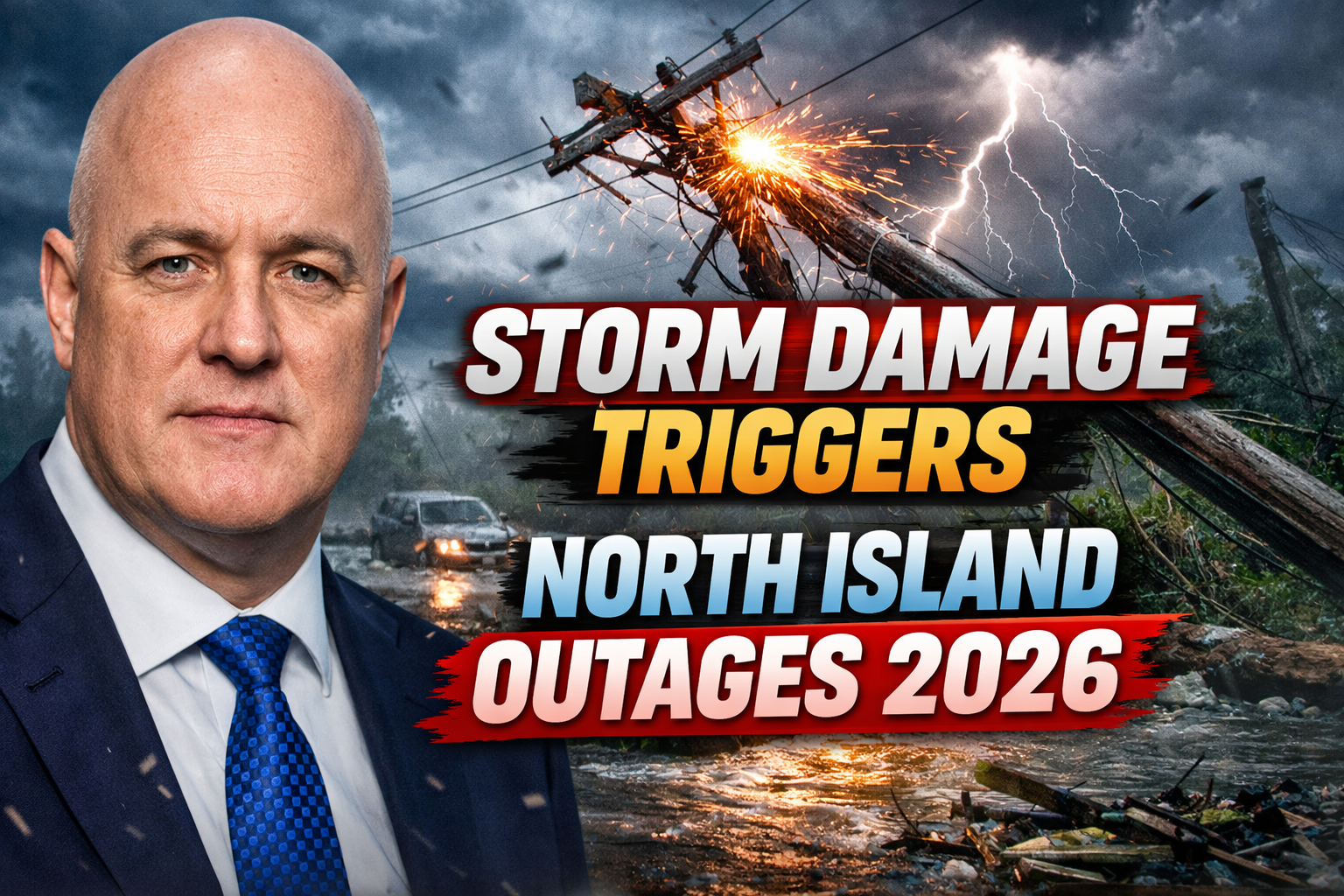
A ferocious storm battered New Zealand’s North Island in mid-February 2026, leaving thousands without power and sparking widespread disruption. Powerco crews battle on in the Whanganui-Rangitīkei region, where nearly 200 properties remain in the dark over a week later, as repair efforts intensify amid challenging terrain and fallen trees.
Storm’s Fury Unleashed
The tempest struck on February 15, unleashing gale-force winds exceeding 120 km/h, torrential rain, and lightning across Manawatū-Whanganui. High winds toppled trees onto power lines, snapped poles, and tangled networks in rural strongholds like Hunterville, Marton, and Mangaweka. At its peak, almost 8,000 properties in Whanganui and Rangitīkei lost electricity, part of a broader outage hitting 25,000 customers on Powerco’s grid.
Civil defense activated states of emergency in Rangitīkei and Whanganui districts, with road closures stranding communities. Flooding swelled rivers, complicating access for repair teams. MetService issued heavy rain warnings until February 16, downgrading from red alerts as the worst passed, but damage lingered.
Powerco’s head of network operations described it as the region’s worst storm impact in years, with crews reporting unprecedented destruction—hundreds of poles leaning, lines draped over branches, and transformers shorted. Initial restoration focused urban cores, but remote farms endured multi-day blackouts.
Powerco’s Response Strategy
Powerco mobilized over 100 lines workers from across the North Island, including reinforcements from Tararua and Wairarapa. Safety first: helicopters surveyed damage in inaccessible gullies, while ground teams cleared debris under live-line protocols to minimize risks.
Priorities cascaded: life-support-dependent customers first, then essentials like water pumps and community hubs. By February 16 evening, 11,000 connections flickered back on. Daily updates tracked progress—Tuesday saw 20,000 restored, leaving 1,600 affected Wednesday morning.
Specialist arborists tackled tree entanglements, a major hurdle in wind-prone Whanganui hills. Drone tech pinpointed hotspots, slashing assessment times. Powerco’s outage map became a lifeline, logging real-time fixes for Hunterville’s outskirts.
Current Repair Status
As of late February 23, around 190 properties in Whanganui-Rangitīkei persist without power—the hardest-hit pockets. Hunterville bears the brunt, with rural lines severed by uprooted gums. Marton and Bulls suburbs neared full recovery, but isolated farms await pole replacements.
Powerco promises 95 percent restoration by February 24, weather permitting. Remaining work involves rebuilding 11kV feeders, testing for faults, and energizing. No firm ETAs for fringes, as soil saturation hinders digging.
Here’s the progression snapshot:
| Date | Outages (Whanganui-Rangitīkei) | Restored That Day | Remaining Challenges |
|---|---|---|---|
| Feb 15 Peak | ~8,000 | – | Initial assessments |
| Feb 16 (Mon) | 25,000 network-wide | 11,000 | Tree clearance priority |
| Feb 17 (Tue) | ~5,000 regional | 20,000 total | Rural access roads |
| Feb 23 (Latest) | 190 | Near complete | Final pole installs, testing |
Civil defense hubs in Bulls, Marton, and Taihape dispensed welfare packs, charging stations, and updates.
Hardest-Hit Areas Spotlight
Hunterville Havoc
This rural nexus saw poles sheared like matchsticks, with winds channeling through Ruahine ranges. Over 200 properties blacked out longest, farmers milking by generator. Powerco erected temporary spans, but full rebuilds drag due to wet ground.
Marton and Bulls Struggles
Marton lost 849 homes initially; Bulls domain closed amid debris. Water treatment glitches from outages prompted conservation calls in Taihape and Rātana. Hubs sustained morale, distributing 30 nightly packages.
Whanganui Rural Reach
Inland spots like Kakatahi (242 affected) and Glen Oroua (202) faced slips blocking crews. Coastal Whanganui dodged worst rains but grappled wind-downed lines. Mangaweka’s 297 outages tested resilience.
Local mayors urged patience, praising Powerco’s round-the-clock grind. Rangitīkei’s Andy Beadle noted dodged rain bullets but crop bruises for maize growers.
Community Impacts and Resilience
Households endured fridge spoils, septic failures, and cold nights. Schools shuttered, businesses ran diesel backups. Vulnerable elders received priority checks; rural isolation amplified woes.
Farmers jury-rigged solar for stock water, but losses mount—estimated $2 million regionally from spoilage and downtime. Community Facebooks buzzed with chainsaw swaps and barbie fundraisers.
Welfare centers evolved: Te Matapihi in Bulls hosted 100 daily, offering hot meals and satphone links. Inter-agency coordination shone, with NZTA clearing SH1 snarls.
Powerco’s Technical Challenges
Storm scars run deep: 150+ poles replaced, kilometers of conductor restrung. Wet weather corrodes joints, demanding dry-out tests. Vegetation management ramps up—pre-storm trims insufficient against mature natives.
Aging infrastructure strained: 40-year-old lines vulnerable to gusts. Powerco invests $50 million yearly in hardening, post-Cyclone Gabrielle lessons. Smart grids, with auto-reclosers, prevented cascades elsewhere.
Mutual aid pacts proved gold—Tararua crews logged 18-hour shifts. Union backing ensured no burnout.
Economic and Agricultural Toll
Whanganui-Rangitīkei, maize heartland, tallies crop flatlining from unpowered irrigation. Dairy missed two milkings; meat processors idled. Early tallies peg $5-10 million hit, insurance claims surging.
Tourism dipped: domain closures curbed visitors. Local economies lean on quick rebounds, buoyed by EQC payouts and government aid hints.
Longer term, resilient networks beckon. Powerco eyes undergrounding rural spurs, solar microgrids for outages.
Government and Emergency Measures
Manawatū-Whanganui Civil Defence logged 14,000 initial outages, scaling to 1,200 by week’s end. States lifted February 17 as weather eased, but recovery lingers.
Ministers toured, pledging infrastructure funds. Genter-era climate proofs gain urgency—wilder storms projected 20 percent fiercer by 2040.
MetService’s warnings saved lives, though some ignored travel bans. Road cops fined 50 for debris dodging.
Safety Tips Amid Outages
Powerco drills essentials:
- Treat downed lines as live—stay 10m clear.
- Generators outdoors only, no house cords.
- Fridges ajar post-4 hours; water boil post-power.
- Conserve: LED torches over candles.
Outage checker: outages.powerco.co.nz texts alerts.
Lessons from Past Storms
Gabrielle 2023 downed 1.5 million lines NZ-wide; this bout smaller but sharper locally. Powerco shaved recovery 30 percent via pre-positioned gear.
Patterns emerge: ex-tropical lows spawn wind bombs. Resilience plans evolve—annual tree audits, pole audits.
Road to Full Recovery
By February 24 close, expect under 50 holdouts. Final sweeps certify networks, prepping for autumn rains. Powerco thanks patience, vowing harder assets.
Communities knit tighter, tales of neighbor aid abound. This storm tests mettle, emerging stronger wired. Whanganui-Rangitīkei bounces back, lights aglow soon.

Nirti Singh is a news writer and digital content contributor at KorakoSpecklePark, covering key stories and regional developments across New Zealand and Australia. Her work focuses on clear, fact-based reporting, ensuring readers receive accurate and timely information.