
A mesmerizing phytoplankton bloom encircled New Zealand’s remote Chatham Islands in early January 2026, painting the surrounding Pacific waters in vivid swirls of green and blue visible from space. Captured by satellites like NOAA-20’s Visible Infrared Imaging Radiometer Suite on January 10, this natural spectacle highlighted the region’s rich marine productivity during the austral summer. Scientists view it as a window into ocean health, nutrient dynamics, and the base of the food web that sustains fisheries and wildlife in this isolated ecosystem.
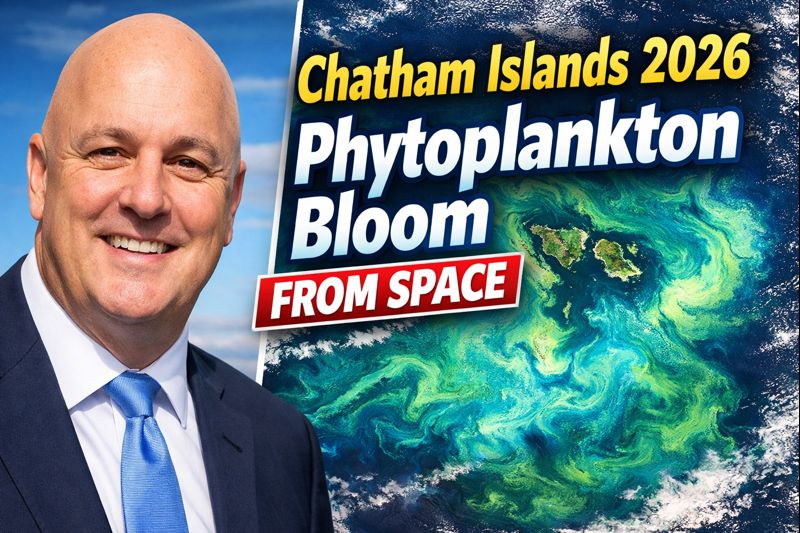
The bloom formed a halo around the islands, about 800 kilometers east of the South Island, driven by seasonal currents and upwelling. Such events recur here due to unique geography, but this one’s scale drew global attention from researchers tracking climate patterns and biodiversity. For environmentalists and locals, it signals both abundance and the need to monitor potential shifts from warming seas.
Captured from Space
Satellite imagery revealed intricate patterns of phytoplankton wisps and eddies stretching hundreds of kilometers, with bright turquoise and emerald hues indicating high chlorophyll concentrations. The NOAA-20 sensor detected these microscopic algae as they exploded in population, their pigments altering ocean reflectance under long summer daylight. Similar views from NASA’s MODIS instruments in past years confirmed the Chatham Rise as a hotspot, but the 2026 event stood out for its density and symmetry.
From orbit, the bloom appeared as a living necklace threading around the main islands—Chatham, Pitt, and smaller outcrops—shaped by surface currents that swirled cells into hypnotic spirals. False-color composites enhanced visibility, turning subtle greens into glowing displays for analysis. Ground stations relayed data in real-time, allowing oceanographers to map biomass estimates exceeding typical seasonal peaks by double digits.
Experts noted coccolithophores among the mix, their chalky shells scattering light into bright blues, alongside diatoms thriving on fresh nutrients. These visuals not only captivated social media but fueled studies on primary production, with pixel-level analysis revealing bloom cores over shallow Rise waters.
The Science Behind the Bloom
Phytoplankton, single-celled photosynthesizers, form the ocean’s grass, converting sunlight and nutrients into energy that ripples up the food chain. Around the Chathams, growth surged as cold Antarctic currents clashed with warmer subtropical flows, mixing deep nutrients to the surface. Summer’s extended light—up to 15 hours daily—supercharged photosynthesis, while calm conditions kept cells afloat without sinking.
The Chatham Rise, a broad underwater plateau rising from 1,000-meter depths to under 200 meters, acts as a natural nutrient trap. Eddies spin here, trapping upwelled silicates and nitrates ideal for diatom blooms, while iron traces from sediments boost efficiency. Temperatures hovered around 15-18°C, optimal for rapid division rates doubling populations daily under ideal light.
Wind patterns played a role too, with light westerlies fostering stratification that starved deeper mixing yet supplied surface bounty. Models predicted the event weeks prior based on sea surface anomalies, validating forecasts from NIWA’s ocean models.
Key Environmental Factors
Upwelling dominates: Diverging currents lift nutrient-laden water, fueling exponential growth until light or grazing limits it. The Rise’s bathymetry—shallower east-west ridge—channels flows, creating persistent frontal zones where productivity triples surrounding open ocean baselines.
Climate influences loom large. La Niña-like conditions in late 2025 cooled waters, enhancing nutrient pulses, while reduced storm activity prolonged the bloom. Long-term, ocean acidification challenges calcareous species like coccolithophores, potentially shifting community structure toward tougher diatoms.
Seasonal timing aligns with krill and zooplankton peaks, preventing unchecked dominance that could deplete oxygen. Human factors stay minimal—low fishing pressure preserves balance, unlike overfished tropics—but vessel traffic risks oil spills in this UNESCO-protected marine zone.
Bloom Drivers Snapshot
| Factor | Role in 2026 Event |
|---|---|
| Nutrient Upwelling | Provided nitrates, phosphates |
| Sunlight Hours | 14-15 hours daily peak |
| Water Temperature | 15-18°C optimal range |
| Currents | Eddies formed visible swirls |
| Bathymetry | Rise shallows enhanced mixing |
Ecological Significance
These blooms underpin a thriving ecosystem, producing oxygen and feeding zooplankton that sustain fish like blue cod, pāua, and rock lobster—key to Chatham fisheries yielding thousands of tons yearly. Seabirds, seals, and whales flock here; the region hosts albatross colonies and migrating humpbacks gorging on euphausiids linked to phytoplankton.
Carbon cycling benefits globally: Blooms sequester CO2 via the biological pump, sinking organic matter to depths and aiding climate mitigation. Biodiversity hotspots emerge, with 2026 surveys noting elevated larval fish densities post-bloom.
Yet risks exist. Intense growth can trigger hypoxic zones if decay outpaces oxygen renewal, stressing benthic life. Strandings of whales and dolphins, frequent here, tie to disorientation in turbid waters or toxic dinoflagellate shifts, though 2026 stayed diatom-dominant and benign.
Marine Life Supported
- Invertebrates: Krill, copepods as primary grazers.
- Fish: Blue cod, hoki spawning grounds.
- Mammals: New Zealand fur seals, Hector’s dolphins.
- Birds: Chatham albatross, petrels diving for prey.
Impacts on Chatham Islands
Islanders—around 600 strong—rely on seas for sustenance and tourism, with blooms signaling good fishing ahead. Commercial catches rose post-similar events, boosting paua exports. Ecotourism operators spotlight satellite views, drawing divers to witness glows from underwater.
Monitoring stations on Waitangi recorded water quality spikes, with locals noting greener bays. Iwi like Moriori view it culturally as te ao mōrehu—living ocean breath—integrating data into kaitiakitanga plans. Resilience builds via community-led sampling, feeding national databases.
Economically, fisheries contribute significantly to GDP, with blooms correlating to higher quotas. Sustainable management caps effort, preserving stocks amid variable productivity.
Satellite Technology Insights
VIIRS excels at bloom detection via ocean color bands (443-678 nm), quantifying chlorophyll-a at 0.1-50 mg/m³ with 750m resolution. Nightfire capabilities track bioluminescence ties, while algorithms filter clouds for uninterrupted series.
NASA’s Aqua and Suomi NPP complemented NOAA data, enabling animations of bloom evolution from late December onset to mid-January fade. Machine learning now automates species ID via spectral fingerprints, revolutionizing remote sensing.
Global parallels abound: Comparable swirls off Patagonia or California underscore universal drivers, aiding predictive models for food security.
Monitoring and Future Outlook
NIWA and Te Arawhiti collaborate on buoys tracking pH, salinity, alongside drone surveys for surface validation. 2026 data refines models projecting bloom intensity under RCP scenarios, forecasting milder events with warming.
Conservation ramps up: Marine protected areas expand, limiting trawling to safeguard nurseries. International treaties like CCAMLR harmonize oversight across the Rise.
Climate adaptation focuses on diversification—aquaculture trials for mussels harnessing post-bloom nutrients. Public engagement via apps shares live imagery, fostering stewardship.
Monitoring Tools Table
| Technology | Purpose | Resolution/Key Metric |
|---|---|---|
| VIIRS (NOAA-20) | Chlorophyll mapping | 750m, daily passes |
| MODIS (Aqua) | Long-term trends | 1km, twice-daily |
| Buoys/Drones | In-situ validation | Real-time nutrients |
| HF Radar | Current tracking | Surface velocities |
Broader Implications
This bloom exemplifies ocean vitality, reminding of microscopic forces shaping planetary health. As satellites democratize data, indigenous knowledge blends with tech for holistic insights. For Chathams, it reinforces identity as guardians of a productive frontier.
Challenges persist—plastic influxes, warming stratification—but optimism prevails through vigilant science. The 2026 spectacle inspires awe, urging sustainable paths amid change.

Nirti Singh is a news writer and digital content contributor at KorakoSpecklePark, covering key stories and regional developments across New Zealand and Australia. Her work focuses on clear, fact-based reporting, ensuring readers receive accurate and timely information.